


UfU Information | Issue 6 – October 2022 | Jonas Rüffer
The role of nature in war
Nature as victim and perpetrator
If environmental destruction in wars is to be measured, a fundamental distinction can be made between two types of environmental destruction:
- Environment as a victim
- Environment as perpetrator
If the environment or nature is a victim of war, it is affected by armed conflicts. For example, if an armored squadron has to cross a wooded area, this area is cleared for the purpose of war. If enemy positions are shelled with artillery, this inevitably causes damage to the ground and to flora and fauna. The damage to the environment is accepted in order to control the terrain or to exploit it for the purposes of war.1
The situation is different with the environment in the role of perpetrator. In this case, nature and the terrain of the conflict are altered in such a way that the manipulated nature is directed against the opposing warring party. If, for example, rivers are deliberately diverted to provoke flooding or crops are destroyed, we speak of the environment in the role of perpetrator.2 Examples can be found early on in history. In ancient times, it was a popular war technique to contaminate the enemy’s drinking water sources with faeces and animal carcasses, for example to force besieged cities to surrender.3
The US Air Force study “Weather as a Force Multiplier: Owning the Weather in 2025” is a modern and at the same time frightening example of the attempt to use nature as a weapon. The study examines the extent to which it would be possible for the US military, or more precisely the US Air Force, to gain control over the weather by 2025 and thus decisively change future military conflicts. 4 The study plays with the idea of being able to change the weather not only in a positive way for the US Air Force, but also, if necessary, so drastically that global communication can be controlled or storms, floods or droughts can be caused in a targeted manner. What sounds like an Orwellian dystopia at first and second glance has already been tested in the Vietnam War.
With Operation Popeye, the USA attempted to create artificial rainfall in North Vietnam and South Laos by “inoculating” clouds with silver iodide. The resulting increased and heavy rainfall was intended to disrupt the transportation of supplies to North Vietnam.5
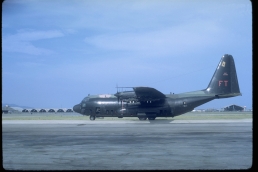
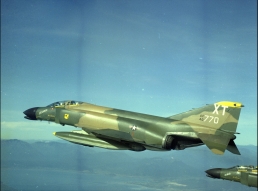
Operation Popeye was carried out with these aircraft.
A Lockheed AC-130A
A McDonnell Douglas F-4 Phantom II
List of sources:
- Wolfgang Lohbeck (2005), Environment and armed conflict: a dilemma with no way out?
- Wolfgang Lohbeck (2005), Environment and armed conflict: a dilemma with no way out?
- Tim Ohnhäuser (2009), The corpse as a weapon. From the cadaver to the development of biological warfare agents
- House, Tamzy; Near, James; Shields, William; Celentano, Ronald; Husband, David; (1996): Weather as a Force Multiplier: Owning the Weather in 2025
- Office of the Historian: 274th Memorandum From the Deputy Under Secretary of State for Political Affairs (Kohler) to Secretary of State Rusk; https://history.state.gov/historicaldocuments/frus1964-68v28/d274