


September 09, 2021
After interruptions due to the pandemic, the municipality’s energy-saving project, which was launched in 2019, can now continue in earnest. In Birkenwerder’s daycare centres and the Pestalozzi elementary school, children will be trained in energy saving in the coming months and technology and usage behaviour will be optimized.
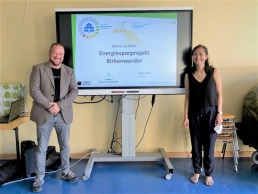
Mayor Stephan Zimniok knows that the employees in the daycare centers and elementary school in Birkenwerder have a variety of tasks and therefore have enough to do, but the municipality still sees climate protection as an important goal – after all, it has declared a climate emergency. For this reason, the municipality of Birkenwerder has commissioned the Independent Institute for Environmental Issues (UfU) to carry out an energy-saving project with the facilities run by the municipality. As the pandemic interrupted the project that had started in November 2019 and only some of the planned project activities could be implemented, the heads of the educational institutions, the mayor and the climate protection manager met with UfU on September 9, 2021 for a school and daycare year kick-off event in the auditorium of the Pestalozzi elementary school in Birkenwerder.
Changing habits to save resources
It makes sense to save energy for various reasons, explained Hoai Tran from the Energy Efficiency and Energy Transition department to the attending mayor Stephan Zimniok, the municipality’s climate manager Stefan Golla, Doreen Wilke (head of the Education and Social Affairs department) and the facility managers Ms. Baierl (Kita Festung Krümelstein), Ms. Roggan (Kita Rumpelstilzchen), Ms. Will (Kita Birkenpilz and Cörnchen) and Mr. Stapel (Pestalozzi elementary school). – To reduce costs; as fossil energy sources will soon be exhausted; to slow down climate change and to strengthen energy and climate-conscious behavior among future adults. The energy-saving project pursues all these goals through technical optimization and the optimization of the everyday behavior of building users. UfU proposes measures to reduce energy waste, some of which are implemented in consultation with the facilities, while others are implemented directly by the facilities themselves. In concrete terms, the project looks like this: Energy tours of the facilities, team workshops with educators and teachers, further training for janitors and several appointments with daycare and school children. The latter focuses on conscious everyday behavior, such as only using lights and heating when they are needed and proper ventilation. The participating children and young people then act as multipliers and should pass on their knowledge to their classmates, friends and families.