May 10, 2023
City of Oranienburg honors commitment of climate protection schools
With the climate protection and energy-saving project at seven schools, Oranienburg is taking an important step towards climate neutrality by 2040.
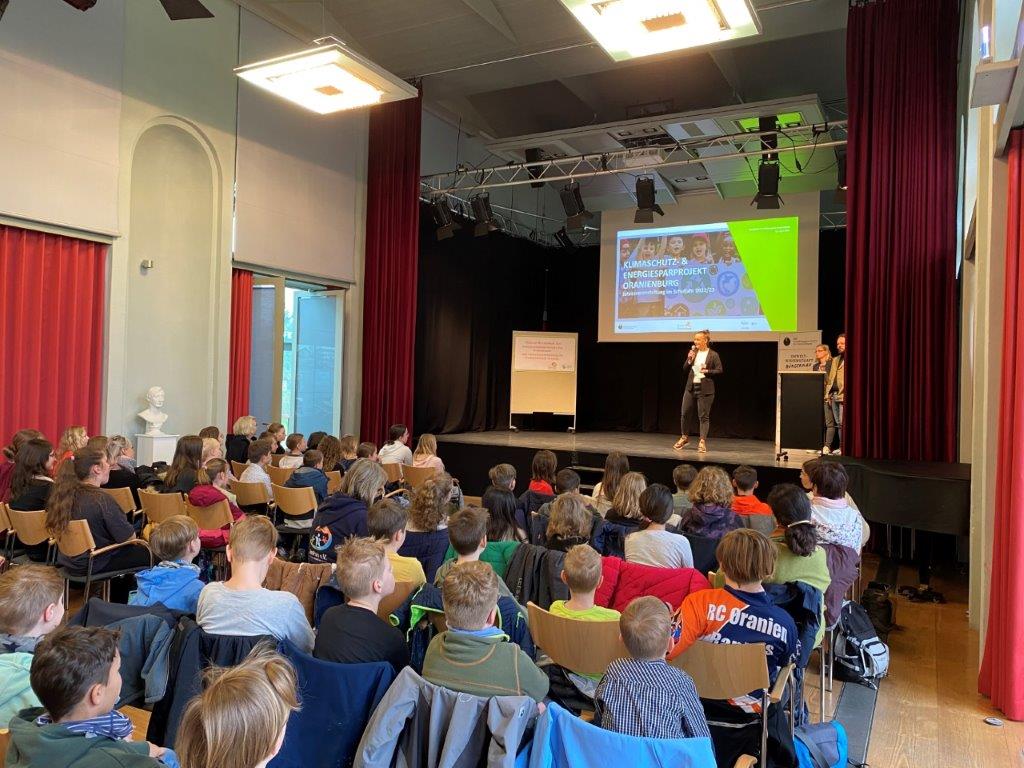
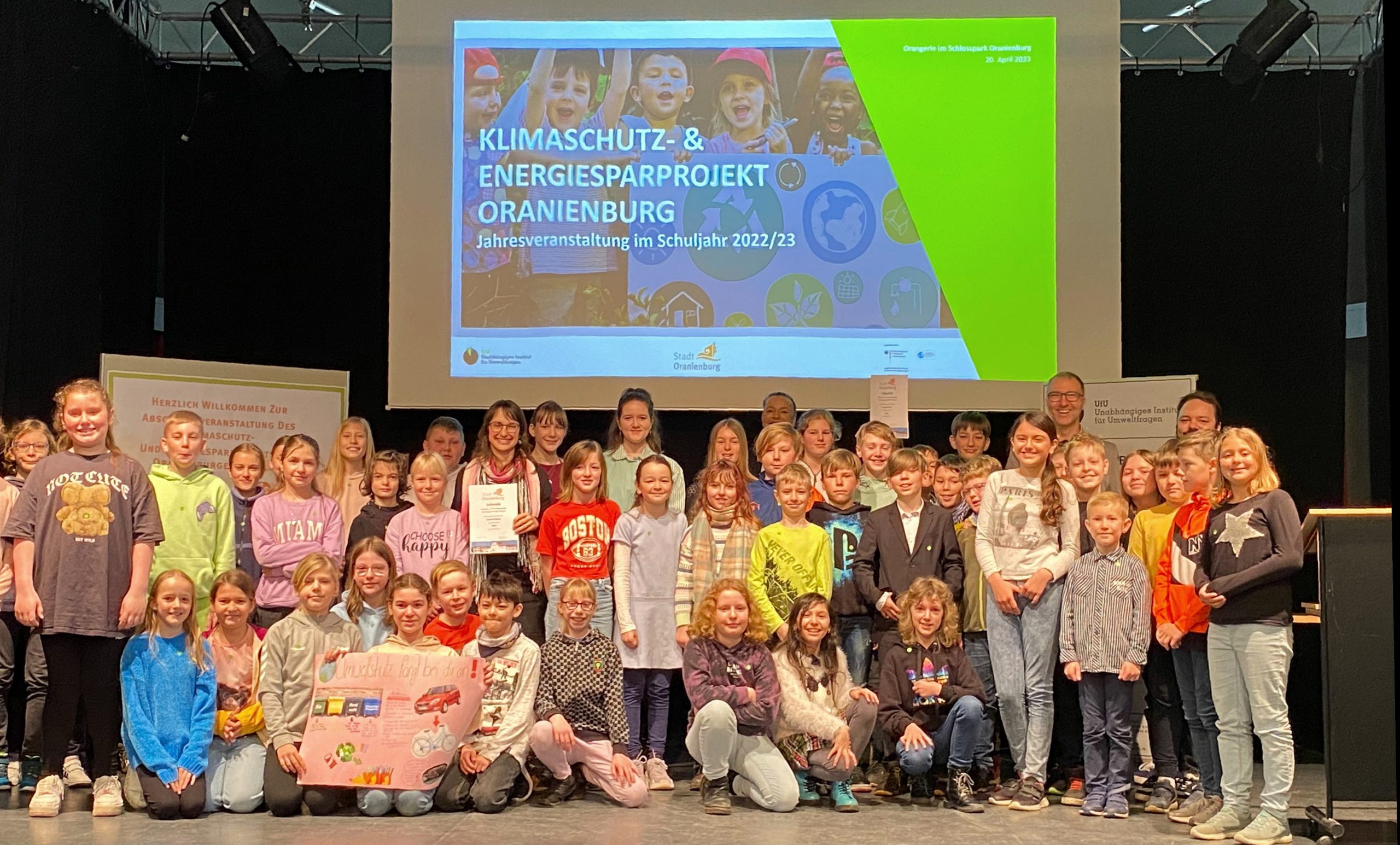
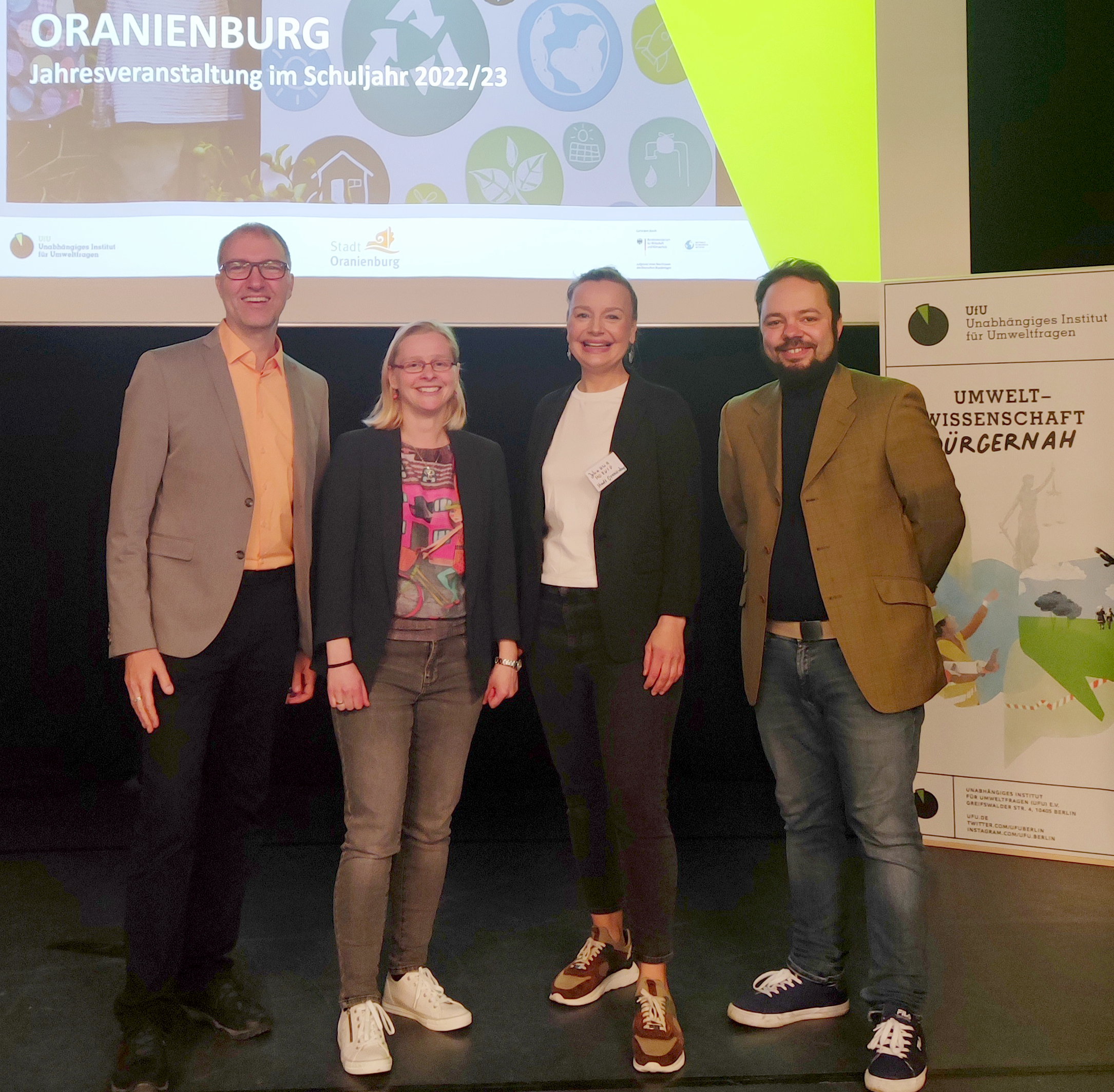
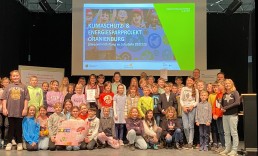
Climate protection is an important task facing cities and municipalities in Germany in particular. Germany wants to be climate-neutral by 2045 – this means that local authorities in particular need to review theircarbon footprint and take action. The town of Oranienburg wants to become climate-neutral five years earlier and has launched a climate protection and energy-saving project in seven schools in 2022, which is being carried out by the Independent Institute for Environmental Issues (UfU e.V.) and the climate protection management of the town of Oranienburg. “The project is an important milestone in Oranienburg’s efforts to achieve climate neutrality,” explained Johanna Hornig from the City of Oranienburg’s climate protection management team. “A lot still needs to happen for Oranienburg to become climate-neutral by 2040. This also includes making children and young people aware of the importance of climate protection at an early age.” Florian Kliche of the UfU department Energy Efficiency & Energy Transition and supervises numerous climate neutrality projects at the institute, including the project in Oranienburg: “Climate protection and saving energy is really fun for the kids. With their ideas, they start very different campaigns at the schools that are good for the climate, reduce the city’s energy costs and make us all independent of expensive energy imports.” When it comes to climate protection, it is worthwhile for local authorities to focus on saving energy in schools. Schools are an important multiplier for effectively implementing climate protection. On the one hand, schools are among the highest energy consumers in the category of public buildings and therefore also burden the budget coffers of municipalities with enormous energy costs; on the other hand, it is important that all citizens, including the youngest, are sensitized to the issue of climate protection. It is precisely through energy-saving projects that pupils take what they have learned home from school and the projects have a broad impact. The energy-saving projects, which UfU has been carrying out in schools for over 25 years, are a tried-and-tested combination of practical experiments and projects as well as teaching units. The pupils form energy teams, visit the heating system with janitors and carry out numerous measurements in their own school. During the school year, pupils dealt intensively with climate protection issues in subject lessons, compulsory elective lessons and working groups and developed their own ideas and solutions to save energy at the school. In this way, the pupils experience self-efficacy and are actively involved in the school’s processes. UfU supports the city of Oranienburg’s climate protection management team in implementing the project in schools. Project manager Oliver Ritter from UfU reports a positive outcome: “Schools are among the biggest consumers of public funds. At the same time, this opens up huge savings potential. We are delighted that the town of Oranienburg and the schools in Oranienburg want to continue to exploit this potential in the coming years.” On April 20, 2023, after one year of the project, a major event took place in the Orangery in Oranienburg Palace Park. Around 100 children and teachers attended the celebratory event. Pupils from seven schools were honored for their activities and projects on stage.
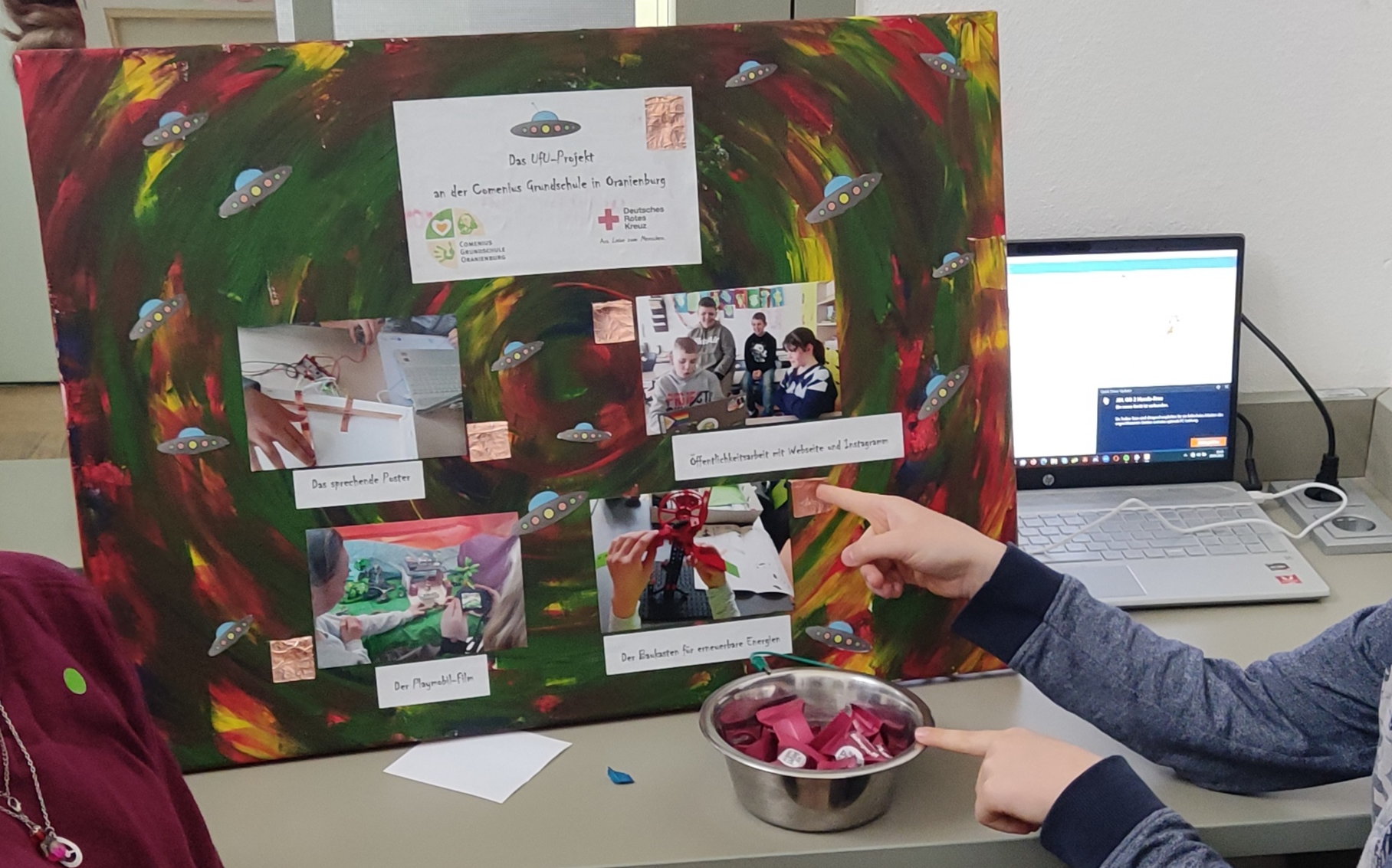
They presented self-made videos, presentations, a talking energy-saving poster and even their own climate song. The city of Oranienburg’s climate protection and energy-saving project has thus reached its first milestone after one year. The project, which is managed by UfU, will continue until 2026. “The project is a great opportunity for our schools to raise their pupils’ awareness of climate protection and energy saving,” says Oranienburg’s head of social affairs Stefanie Rose. “I am thrilled to see how committed many pupils are to the topic and how willing they are to take responsibility for climate protection.” The short presentations and performances by the school classes, which took to the stage one after the other with their teachers, were correspondingly diverse. The project, which is funded by the Federal Ministry for Economic Affairs and Climate Protection, will continue over the next few years. By the 2025/26 school year, the energy consumption of schools is to be continuously reduced and the topic of climate protection is to be anchored even more firmly in Oranienburg’s schools.