



Call for proposals from Latin American countries – Analyses of civic space and public participation in climate matters
30.08.2022
Para la versión en español: ver abajo!
English:
Call for proposals from Latin American countries – Analyses of civic space and public participation in climate matters
Within the project ZIVIKLI, a joint project with BUND (Friends of the Earth Germany), UfU e.V. examines the legal framework, existing structures as well as specific possibilities and processes that enable civil society organizations (CSOs) in Argentina, Chile and Costa Rica to participate in national climate policy, especially with regard to the formulating and updating processes of their Nationally Determined Contributions (NDCs).
For both countries, UfU calls for proposals for carrying out a research answering specific questions about the participatory processes and their impacts in the two countries.
Below, you will find the Terms of Reference (TORs) and additional documents for the Call of Proposals for each country for further specifications.
UfU is looking forward to your proposal until 12th of October 2022.
For questions, please contact Sarah Kovac
Español:
Convocatoria de propuestas – Análisis del espacio cívico y de la participación pública en relación con el clima en países de América Latina
Dentro del proyecto ZIVIKLI, un proyecto conjunto con BUND (Amigos de la Tierra Alemania), UfU e.V. examina el marco legal, las estructuras existentes así como las posibilidades y procesos específicos que permiten a las organizaciones de la sociedad civil (OSC) de Argentinia, Chile y Costa Rica participar en la política climática nacional, especialmente en lo que respecta a los procesos de formulación y actualización de sus Contribuciones Determinadas a Nivel Nacional (NDC).
Para los países objeto de estudio, la UfU convoca propuestas para llevar a cabo una investigación que responda a preguntas específicas sobre los procesos participativos y sus impactos en los dos países.
Al final de la página encontrará los Términos de Referencia (TdR) y los documentos adicionales por la Convocatoria de Propuestas de cada país para obtener más especificaciones.
UfU espera su propuesta hasta el 12 de octubre de 2022.
Si tiene preguntas, por favor póngase en contacto con Sarah Kovac
Documents/ Documentos:
Argentina:
Appendix1_EsquemaDeEvaluación_participation_ES
Appendix2_Structure_CountryReport_ Argentina
FinancialProposalForm_3_Argentina
Chile:
Appendix1_EsquemaDeEvaluación_participation_ES
Appendix2_Structure_CountryReport_ Chile
Costa Rica:
Appendix1_EsquemaDeEvaluación_participation_ES
Call for Proposals - Analyses of civic space and impact of public participation in climate matters
Within the project ZIVIKLI, a joint project with BUND (Friends of the Earth Germany), UfU e.V. examines the legal framework, existing structures as well as specific possibilities and processes that enable civil society organizations (CSOs) in Kazakhstan and the Republic of Moldova to participate in national climate policy, especially with regard to the formulating and updating processes of their Nationally Determined Contributions (NDCs).
For both countries, UfU calls for proposals for carrying out a research answering specific questions about the participatory processes and their impacts in the two countries.
Below, you will find the Terms of Reference (TORs) and additional documents for the Call of Proposals for each country for further specifications:
Kazakhstan:
The Deadline for submission of proposals for the study on Kazakhstan was prolongued to 3 October 2022.
ToRs_CountryAnalysis_ENG_1_Kazakhstan_rev
ToRs_CountryAnalysis_RUS_1_Kazakhstan_rev
Appendix1_Evaluationscheme_participation_ENG_final
Appendix1_Evaluationscheme_participation_RUS_short
Appendix2_Structure_CountryReport_ENG_1_Kazakhstan
Appendix2_Structure_CountryReports_final_RUS
05-FinancialProposalForm_1_Kazakhstan
05-FinancialProposalForm_1_Kazakhstan_RUS
UfU is looking forward your proposal for Kazakhstan until 3 October 2022.
Republic of Moldova:
ToRs_CountryAnalysis_ENG_2_RepMoldova
Appendix1_Evaluationscheme_participation_ENG_final
Appendix2_Structure_CountryReport_ENG_2_RepMoldova
05-FinancialProposalForm_2_RepMoldova
UfU is looking forward to your proposal on Moldova until 16 September 2022.
For questions, please contact Anne Nemack.

Improving e-Participation in European Environmental Policy
18. March 2022
In its discussion paper, UfU makes suggestions on how digital public participation can be improved at the EU level, for example via the European Commission’s “Have-your-say Portal”.
Europe’s citizens care about environmental protection and there is a strong desire for change towards more climate protection and sustainability. This is shown, for example, by the results of the Special Eurobarometer survey (2019) commissioned by the European Commission: over 90% of those interviewed across Europe believed that climate change is a serious problem and 94% said that environmental protection is important to them personally. Many people also want to get involved in shaping the necessary transformation – and they have a right to do so, both in their country and at the European level. In accordance with the Aarhus Convention, the rights of European citizens and environmental associations to information, participation and access to justice must be implemented not only within the EU member states, but also for European procedures. This means, for example, that when EU regulations on air quality are revised or the 2030 climate target plan is drafted as part of the European Green Deal, the public must be involved and consulted.
Not only as a result of the Corona pandemic, participation processes have been increasingly shifted to the digital space in the last years. On the one hand, digitalisation bears great potential for the participation of different social groups and organisations. On the other hand, however, it also brings with it various challenges. In practice, European institutions are still struggling to respond appropriately to the new, digital participation needs and to design modern, effective participation tools and formats.
In that context and building on a series of “Aarhus Workshop” held by UfU, this discussion paper on digital participation (e-participation) has been written. In the paper, UfU, together with Prof. Dr. Alexandra Aragão from the University of Coimbra, Portugal, discusses how the European Union can improve the digital participation of citizens and organisations in environmental matters. The paper focuses on online consultations of the public, initiated by the European Commission via the Have-your-say-Portal. This web-based portal offers citizens, stakeholders and academics, among others, the opportunity to comment on new EU policies and existing legislation. The discussion paper first describes how the public can participate via the online portal. It then systematically outlays the challenges and shortcomings of e-participation in European environmental decision-making. Based on this, concrete solutions for improving e-participation are proposed.
Discussion Paper: Strengthened e-participation in European environmental decision-making
Background:
The discussion paper was written as part of the project “European Implementation of the Aarhus Convention in the Digital Age (EU-AarKo)”, which was funded by the German Federal Environment Agency (UBA) and the Federal Ministry for the Environment, Nature Conservation, Nuclear Safety and Consumer Protection.
The aim of the project was, on the one hand, to organise dialog and positioning processes regarding the implementation of the Aarhus Convention at the European level and, on the other hand, to develop information and educational materials around the topics of environmental information access, participation and legal protection in environmental matters.
In 2020 and 2021, a total of five digital Aarhus workshop meetings were organised by UfU. As a result, among others, the joint position paper “German-Portuguese-Slovenian Civil Society Declaration on Legal Access for Citizens* and NGOs at EU Level” and the discussion paper “Strengthened e-participation in European environmental decision-making” were published.
In addition, four short explanatory films were produced as well as three brochures on the Aarhus Convention and the existing opportunities to get involved in environmental policy making at the European level.
Further information and all publications can be found here: https://www.ufu.de/en/projekt/eu-aarko/
Further information on the Aarhus Convention and its implementation at European level can be found here (German): www.aarhus-konvention.de
Influencing European environmental policy - New short films and brochures
10. March 2022
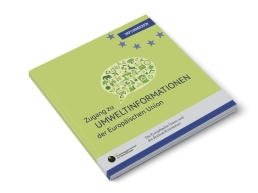
What rights do citizens and NGOs have regarding information, participation and legal action at EU level? The four new short films and three brochures of UfU explain this in a clear and compact way.
The Aarhus Convention: An international treaty that establishes a number of rights of the public (individuals and their associations) with regard to the environment. The Aarhus Convention is the first international environmental treaty to set international minimum standards for access to environmental information for all people, to regulate participation in environmental decision-making, and to enshrine access to justice in environmental matters. UfU explains how this works in its four new short films (German with English subtitles). The focus is on the European level and not on the implementation in each EU member states:
1.) Introduction: What does the Aarhus Convention mean for civil society’s rights to information, participation and legal action at the EU level?
2.) Environmental information: Every person and organisation has the right to receive environmental information. But what is environmental information and how can it be obtained from EU institutions, e.g. the European Commission?
3.) Public Participation: How can we participate at the EU level? For example, launching a European Citizens’ Initiative, submitting a position in a legislative process, or going to a European Citizens’ Forum.
4.) Access to justice: What legal steps can you take to protect the environment in Europe? There are various complaint and legal action options for individuals and organisations.
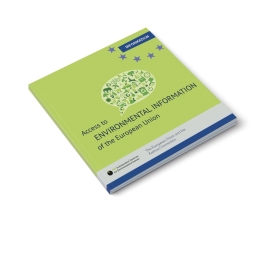
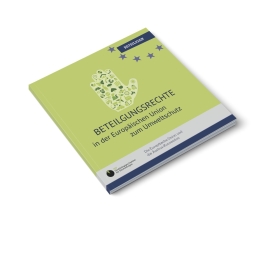
For more information on the Aarhus Convention and your options for standing up for environmental protection at the European level, read the three brochures in German and English:
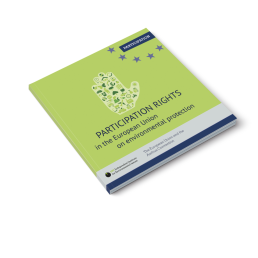
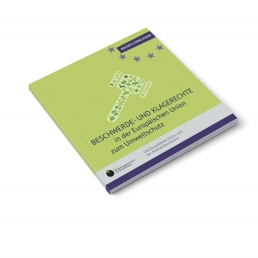
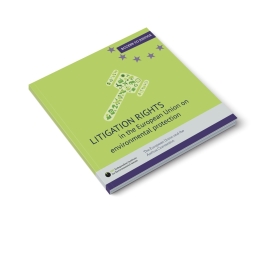
Background:
The brochures and films were produced as part of the project “European Implementation of the Aarhus Convention in the Digital Age (EU-AarKo)”, which was funded by the German Federal Environment Agency (UBA) and the Federal Ministry for the Environment, Nature Conservation, Nuclear Safety and Consumer Protection.
The aim of the project was, on the one hand, to organise dialog and positioning processes regarding the implementation of the Aarhus Convention at the European level and, on the other hand, to develop information and educational materials around the topics of environmental information access, participation and legal protection in environmental matters.
In 2020 and 2021, a total of five digital Aarhus workshop meetings were organised by UfU. As a result, among others, the joint position paper “German-Portuguese-Slovenian Civil Society Declaration on Legal Access for Citizens* and NGOs at EU Level” and the discussion paper “Strengthened e-participation in European environmental decision-making” were published.
Further information on the workshop discussions can be found here: www.ufu.de/projekt/eu-aarko.
Further information on the Aarhus Convention and its implementation at European level can be found here (German): www.aarhus-konvention.de
5 for the Climate - Civil Society Participation in Climate Policies
27. May 2021
“5 for the climate” – A digital week on civil society involvement in climate policy (14 – 18 June 2021)
Civil society involvement is still not common practice and in many countries around the world civic space is increasingly restricted. However, civil society organisations are key stakeholders in developing and implementing climate policies. They hold an incredible amount of knowledge and expertise and are well connected with local communities who play a crucial role in fighting the climate crisis.
As the need for action is greater than ever, we need to learn from experiences and cases of success from around the world. “5 for the climate” is an international exchange and networking week initiated to jointly examine if and how civil society can participate in climate policy making. Analyses of barriers that hamper involvement will help to identify instruments and strategies of actions that can help improve conditions and possibilities of participation in climate matters.
We aim to connect civil society organizations and actors, think tanks, project implementers and other relevant stakeholders in the field of climate. Together, we will reflect on forms and opportunities of civil society participation, share our experiences of fighting climate change from a civil society perspective, explore current good practices of civil society participation, and we will develop strategies to secure civil society’s participation for more ambitious climate policies.
Formats during the week
We offer different kinds of input and exchange opportunities in various working and networking formats. The program is filled with:
- interactive workshop sessions (90 minutes)
to jointly work on pressing questions of civil society engagement and look into frameworks, visions and conditions for involving civil society.
- deep thinking sessions (60 minutes input + Q&A)
that give you the chance to listen to relevant findings of researchers and practitioners who dig deep in the field of civil society engagement in climate policy and beyond.
- hands on sessions (60 min presentation + discussion)
in which we take you to places of real civil society engagement. Listen to first-hand success stories, learn about fights for climate justice and action on the ground -particularly in the field of climate and energy.
- panel debates (90 minutes debate + discussion)
in which a diverse set of exciting speakers discusses questions such as how the Covid-19 crisis affects the quality of participatory formats and influences access to political processes.
- interactive working group sessions (45 minutes)
in which we invite you researchers and practitioners to jointly elaborate basic requirements for meaningful participation. What are criteria of participatory processes that are perceived as transparent, inclusive, at eye level, enabling and continuous? We are going to look into those 5 elements once a day in order to further define their meanings and understand their implications.
Networking opportunities
Even in times when we collaborate on screens, we need spaces to get together informally. We can happily offer you two easy networking formats which you are invited to make use of:
- The virtual Lounge
in which you can find other like-minded talking partners, join ongoing small-group discussions on networking tables or create one yourself and invite other for exchange.
- Booths (virtual stands)
which you can get to represent your organization and/or provide materials – e.g. the latest release of your project. Booths are perfect to exchange one-on-one and for in-depth discussions, to build synergies and start collaborations.

Online Course “Registration of Contaminated Sites” now accessible
26. May 2021
The registration of (potentially) contaminated sites in a cadaster is an important step to gain an overview over soil contaminations. Thus, a cadaster is an important tool to plan and carry out necessary securing and decontamination activities at contaminated sites to prevent impacts on public health originating from these areas.
The Online Course “Registration of Contaminated Sites” equips government officials, civil servants, students and other experts alike with the necessary knowledge to carry out the registration of contaminated sites.
- The Vietnamese version of the online course is exclusively for civil servants, government officials and other experts in Vietnam. With the successful finalization of the online course, the participants gain an official certificate.
- The English version of the online course is open for experts, students and interested citizens alike.
The course presents technologies to identify and manage contaminated sites, which can also be applied in other countries than Vietnam: This includes a deeper insight into the recording process of potentially contaminated sites, in particular into the necessary prerequisites, preparation, individual research and recording activities to identify and detain contaminated sites. A special focus is placed on the survey of craft villages, industrial zones and other relevant areas. A Case Study Section introduces examples of (former) contaminated sites in Germany and the securing or decontamination measures applied.
The English version of the Online Course Registration of Contaminated Sites can be accessed at UfU interaktiv.
The Online Course “Registration of Contaminated Sites” was developed within the project “Practical handling of data of a register of contaminated sites using the example of Bắc Ninh province (CapaViet2)”, which is financed by the „Exportinitiative Umwelttechnologien“ of the German Federal Ministry for the Environment, Nature Conservation and Nuclear Safety (BMU).
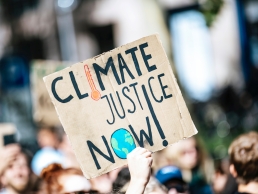
Study: Shaping climate policy with civil society?!
8. February 2021
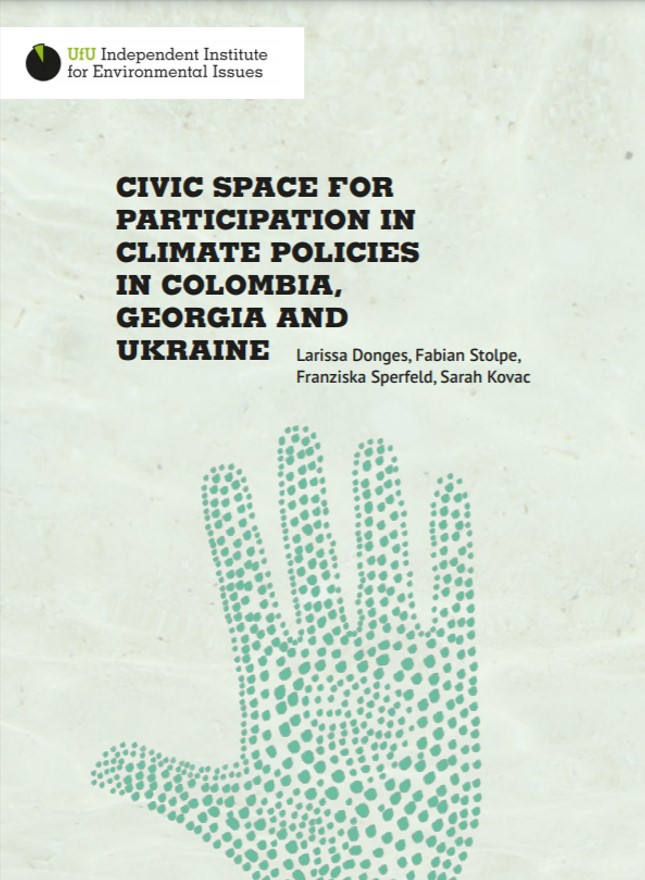
Shaping ambitious climate policy with civil society? In a comprehensive study, UfU has investigated whether and how civil society organizations are involved in national climate policy processes in Colombia, Ukraine and Georgia. The analysis addresses the political and legal framework for participation, existing state and civil society structures, and concrete participation processes in the three countries. Among other things, UfU investigated the extent to which environmental organizations were able to contribute their positions to the current elaboration/revision of national climate protection targets (Nationally Determined Contributions – NDCs). The detailed evaluation scheme developed by UfU makes it possible to investigate framework conditions for participation and concrete participation processes in other countries as well. Together with the project partners and local actors, various obstacles were identified that impede effective participation of civil society. The study derives country-specific recommendations on how participation in climate issues can be improved and consolidated in the future. In addition, the study presents good practice examples for participation in climate policy from eight other countries that can point the way forward.
The study makes clear that improvements are needed at various levels to ensure that civil society actors are heard on environmental and climate issues. In the cases studied, it is primarily procedural barriers that impede an exchange of views, interests and experiences between state and civil society actors and thus a joint solution finding. With regard to the participation formats analysed, three types of deficits can be identified above all: first, a lack of implementation of the participation legislation; second, only a low level of participation; and third, insufficient consideration of the results of the participation process. Much more profound than these deficits of the participation processes, however, is the increasing curtailment of civic space, i.e. the scope of action of civil society, in many countries in recent years, which restricts the participation opportunities of environmental activists. In addition to restrictions on civil society’s ability to act due to the establishment of elaborate administrative and approval processes and government restrictions on the acceptance of (foreign) donations, as well as restrictions on freedom of the press, freedom of expression, and freedom of assembly, harassment, physical violence, criminalization of activists, arbitrary arrests, and assassinations also lead to a reduction of civil society’s space to act in many states.
The full study can be found here:
Click here for the short version.
In addition, individual country reports for Colombia, Georgia and Ukraine have been written and translated into the local languages:
Country report Colombia, English and Spanish
Country report Georgia, English and Georgian
Country report Ukraine, English and Ukrainian
The study is part of the project “Strengthening Civil Society in National Climate Policy“, which is funded by the German Federal Ministry for the Environment, Nature Conservation and Nuclear Safety (BMU) as part of the International Climate Initiative (IKI).

Civic space for participation in climate policies

04. November 2020
In 2015, many countries, including Colombia, Georgia and Ukraine, agreed
on the Paris Agreement to limit global warming and its impacts. However, current national
commitments (Nationally Determined Contributions – NDCs) are inadequate to keep the
rise in global temperature in this century well below 1.5 °C above pre-industrial levels. Time
is running out, and rapid and far-reaching shifts across all sectors are required. Civil society
actors play a crucial role in developing and implementing climate policies because they act as
watchdogs and advocates for a fair socio-environmental transformation. The scope of their
activities and advocacy work ranges from raising awareness about climate change, building
capacity, supporting climate change mitigation and adaptation activities to conducting research,
developing strategies and measures, and influencing concrete climate policies.
The purpose of the study “Civic space for participation in climate policies in Colombia,
Georgia and Ukraine” was to investigate the environment and conditions for climate-related
participation, such as the legal framework for participation, as well as concrete practices
of participatory policy making in Colombia, Georgia and Ukraine. The analysis explores how
national civil society is being involved in political processes related to the Paris Agreement. The
focus thereby lies on organised groups, rather than individuals and the general public. Are civil
society organisations involved in the development of climate-relevant national plans, strategies
and other document? Are there good examples or good approaches of participation that enable
civil society actors to effectively influence national political processes and raise ambition in
climate matters? The study also identifies concrete country-specific barriers that hamper or
avoid meaningful, effective and long-term participation, and gives advice for overcoming these
barriers. Furthermore, the study examines selected examples of good practice in climate-related
participation from eight other countries around the world.
The full study can be downloaded here:
The study is part of the project Strengthen Civil Society for the implementation of national climate policy. The project is funded by the Federal Ministry for the Environment, Nature Conservation, Building and Nuclear Safety (BMUB) as part of the International Climate Initiative (IKI).

Visions for green urban development in Hue (Vietnam)
2. November 2020
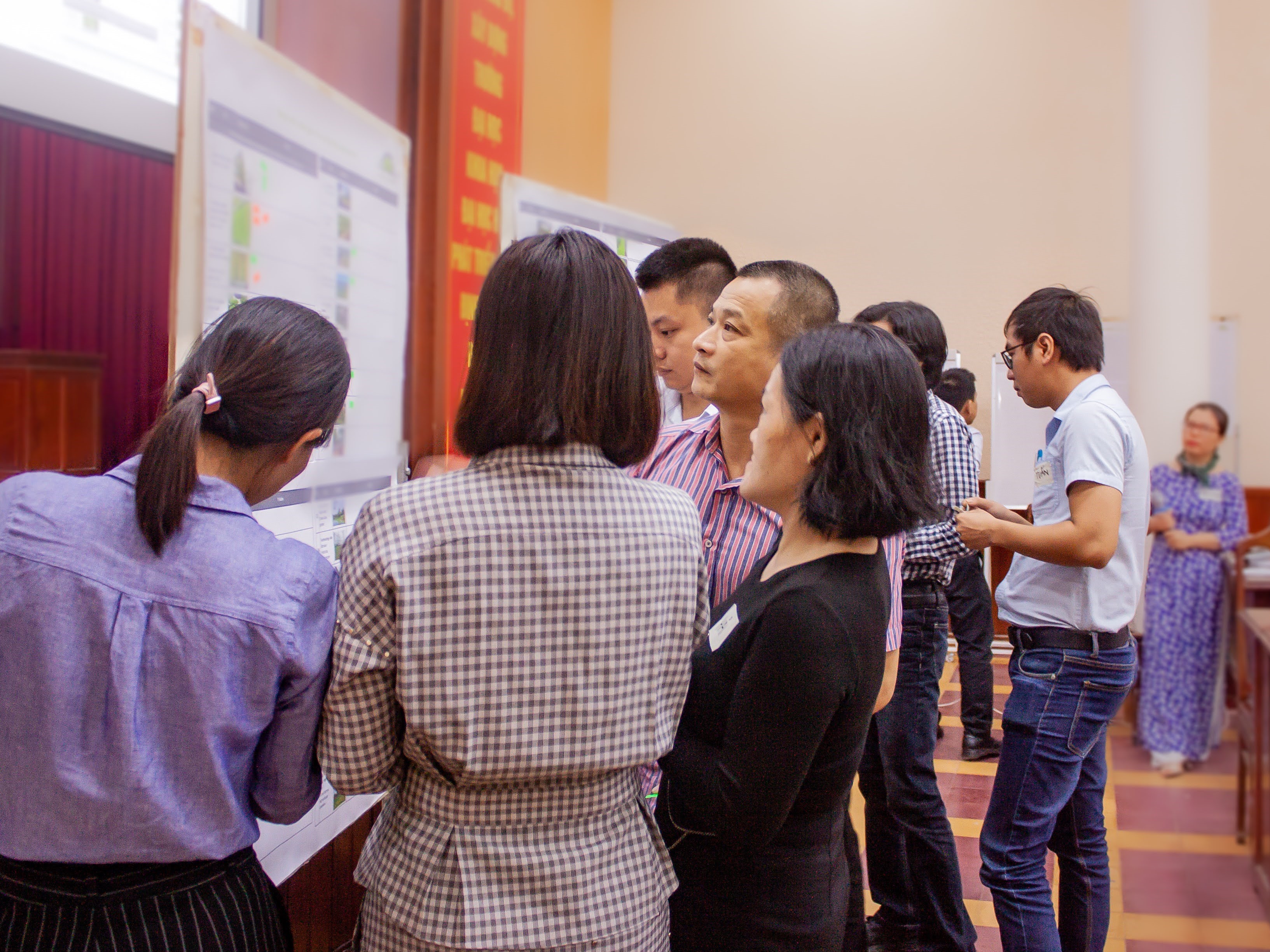
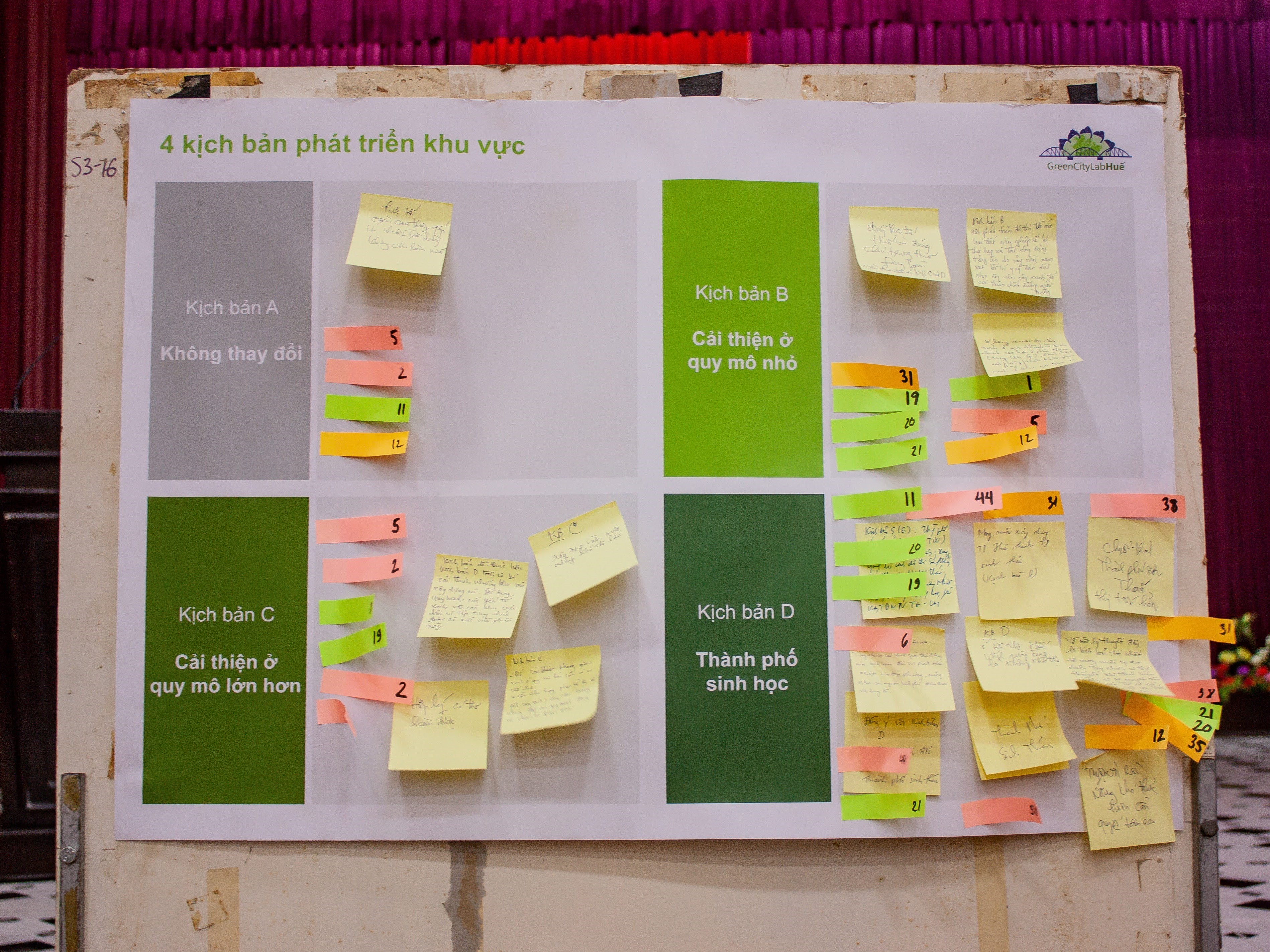
On 31st October, 2020, the GreenCityLabHuế project organized the first stakeholder workshop to discuss the scenario development for the implementation of nature-based solutions in the city of Hue. The workshop was organized with the technical guidance from the Humboldt-Universität zu Berlin (HUB) and the Independent Institute for Environmental Issues (UfU) and hosted by the Vietnamese partners, the Mientrung Institute for Scientific Research (MISR), the Thua Thien Hue Institute for Development Studies (HueIDS) and the Faculty of Architecture, Hue University of Sciences (HUSC), at the A1 Auditorium of the Hue University of Sciences.
The stakeholder workshop forms part of the co-design and co-learning process to develop future scenarios for green and blue infrastructure development in Hue. It is crucial to adapt important steps of the modelling process to local conditions, and to select the sites for nature-based solution (NBS) modelling at site-level in the following research and development project phase. The team of the GreenCityLabHuế project would like to thank all stakeholders for their support and contributions.
At the beginning of the stakeholder workshop, MSc. Hoang Thi Binh Minh (MISR) and Dr. Nguyen Vu Minh (HUSC) presented some key results of the definition phase of the GreenCityLabHuế project, including (1) Benefits of NBS for the city of Hue, (2) a typology of GBI elements and ecological performance, (3) a categorization of land-use classes and an inventory of GBI, (4) documents addressing the development of Hue city towards a central government city, (5) documents addressing climate change adaptation and mitigation of the Thua Thien Hue Province, (6) a map of key actors for NBS development in Hue city, (7) and an evaluation of the awareness of climate change and social aspects for NBS in Hue city. The presentation was followed by several discussion rounds were these questions were addressed:
- Are the proposed interventions realistic and acceptable?
- What visions regarding NBS development do the participants have for Hue? What would the participants generally change in the developed scenarios? What elements of NBS should be part of the future scenarios?
- Should measures and interventions be differentiated between different parts of Hue city within a given scenario?
- Are there spatial zones where no interventions and measures should be implemented or where specific measures are not allowed?
- Is there more detailed information available on anticipated rates of conversion (as well as locations of planned expansions)?
In the workshop 20 stakeholders from different relevant institutions and organizations in Hue participated: the Department of Planning and Investment, the Department of Agriculture and Rural Development, the Environmental Protection Agency-DONRE, the Land Administration officer of Huong So ward, the Greenery Company, HEPCO, HueWaco, the Hue Monuments Conservation Center, the Institute of Construction Planning, the Faculty of Environmental Sciences –HUSC, the Faculty of Land Resources and Agricultural Environment-Hue University of Forestry and Agriculture, the Elderly Association, the Institute of Resources and Environment-Hue University, the Institute of Public Health Research, the Happiness School Programme, the Ho Chi Minh Communist Youth Union, the Beekeeping Association, and some young people living and working in the city of Hue.
Here you can find further information on the project: www.greencitylabhue.com

New Learning Package "Blue Gold - Our Drinking Water and Climate Change"

27. July 2020
The sixth learning package on environmental issues with the main topic “Blue Gold – Our Drinking Water and Climate Change” has been published. UfU in cooperation with the report project “Global Ideas” by Deutsche Welle (DW) developed the learning package # 6 on the topic of “drinking water”. It is available here. The learning package deals playfully with the precious, increasingly scarce raw material drinking water and the question of what we can do to ensure that everyone has access to clean drinking water?
“Global Ideas” is a multimedia reportage project by Deutsche Welle (DW) on the topics of climate and environmental protection and the conservation of biodiversity. With funding from the International Climate Initiative (IKI) of the Federal Ministry for the Environment (BMU), since 2009, DW has been producing TV reports, background reports, and web specials, in order to inform people around the world about exemplary protection projects and to inspire them to act.
For the new project section “Great Solutions – The Road from Paris” from 2017 to 2022, DW is striving to expand its educational work. Appropriate learning packages will be developed around selected key topics from the field of climate and environmental protection in order to get children and young people interested in environmental protection and to convey complex topics in an easily understandable manner. The offer is aimed to be for students between the ages of 12 and 16 worldwide and can be used by teachers and educational institutions free of charge in German, English and Spanish in classroom teaching as well as in homeschooling.
Together with the “Global Ideas” editorial team of Deutsche Welle, UfU will develop learning packages on various environmental issues by 2022. So far, five further learning packages have been published on the topics of “plastic”, “forest”, “green spaces in cities”, “food waste” and “pollinators”.