



E-Learning formats regarding environmental protection in Vietnam
23rd Septemeber 2020
Interest in and needs for E-Learning formats regarding environmental protection in Vietnam
In the project DigiViet, UfU analyzed the current need for E-Learning formats dealing with environmental protection and the management of contaminated sites in Vietnam. This was supplemented by insights into some “Best-Practice” examples for E-Learning opportunities from Vietnam as well as other countries. The knowledge, collected through expert interviews and an online survey for employees from environmental agencies at the provincial level (DONREs), was summarized in the study E-Learning Opportunities regarding Environmental Protection in Vietnam: Key considerations for an E-Learning Platform about the Management of Contaminated Sites.
A summary of this study is now available in English and Vietnamese.
The DigiViet-Study came to the conclusion that in Vietnam, there is a strong interest in and need for E-Learning opportunities in general, but also in the environmental sector. The Vietnamese government supports the development of E-Learning formats and in the past years passed a comprehensive and modern legislation.
All experts who participated in our interviews and the online survey showed interest in E-Learning formats related to the management of contaminated sites.
In Vietnam, E-Learning opportunities are mostly offered by universities and schools, while the majority of all respondents identified the need for an E-Learning format about contaminated site management for the training of public agency staff.
The knowledge collected for the DigiViet-study contributes to the development of the first online-training about contaminated site management for staff from DONREs in Vietnam. The training E-Learning Opportunities regarding Environmental Protection in Vietnam is part of the project CapaViet2. While the Vietnamese version of the training is intended for public authority staff in Vietnam, the English version will be accessible for a wider audience at the UfU website.
Fore more information about this project and to see our publications on this subject click here.

Environmental lawsuit at EU level - Third digital Aarhus Workshop
18th September 2020
Invitation to the third digital Aarhus Workshop
The Department of Environmental Law & Participation invites you to a series of events on challenges of implementing the Aarhus Convention at the European level.
Series of Events 2020/2021
Challenges of Implementing the Aarhus Convention at the European Level (EU-AarKo)
When: Spring 2020 to Autumn 2021
Where: Berlin, Lisbon and Ljubljana
As part of the project “European Implementation of the Aarhus Convention in the Digital Age (EU-AarKo)”, the Independent Institute for Environmental Issues (UfU) e.V. provides during the EU Council Presidency of the four Member States Croatia, Germany, Portugal and Slovenia an open space for the European civil society, experts and practitioners in the field of environmental law to exchange their views and adopt a clear position on the lack of effective access to European courts (communication ACCC/C/2008/32 to Compliance Committee of the Aarhus Convention).
A total of five events will take place in Germany, Portugal and Slovenia. On 11 May 2020 and 30 June 2020 interested participants from Germany and Belgium took part in the first two digital workshop discussions. The next English virtual workshop will take place in November 2020. In spring 2021, another workshop may take place in Lisbon, Portugal. Before a final event in Berlin rounds off the series of events at the end of the year 2021, UfU is planning a fifth workshop in Ljubljana, Slovenia, in autumn 2021.
Third Aarhus Workshop
When: 17th November 2020, 2 pm -5 pm (CET)
How: Zoom Meeting
We would like to invite you to our third digital Aarhus Workshop, which will be held as a Zoom meeting on 17th November 2020, from 2pm to 5 pm (CET). We would particularly like to discuss with you how effective access to justice on the European Union level could look like. Among other issues, we will exchange opinions on the draft amendment to the Aarhus Regulation, which is to be published by then. The objective of the workshop is to develop a joint position paper.
The event is free of charge. Please register by sending a short e-mail with the subject heading “Yes, third workshop talk” to (larissa.donges@ufu.de) if you would like to participate. All interested participants will receive the detailed programme and registration information via e-mail.
If you have any questions regarding the topics of the workshop, please contact our dear colleague Franziska Sperfeld.
You will find more information about the Aarhus Convention and the Aarhus Workshops here.
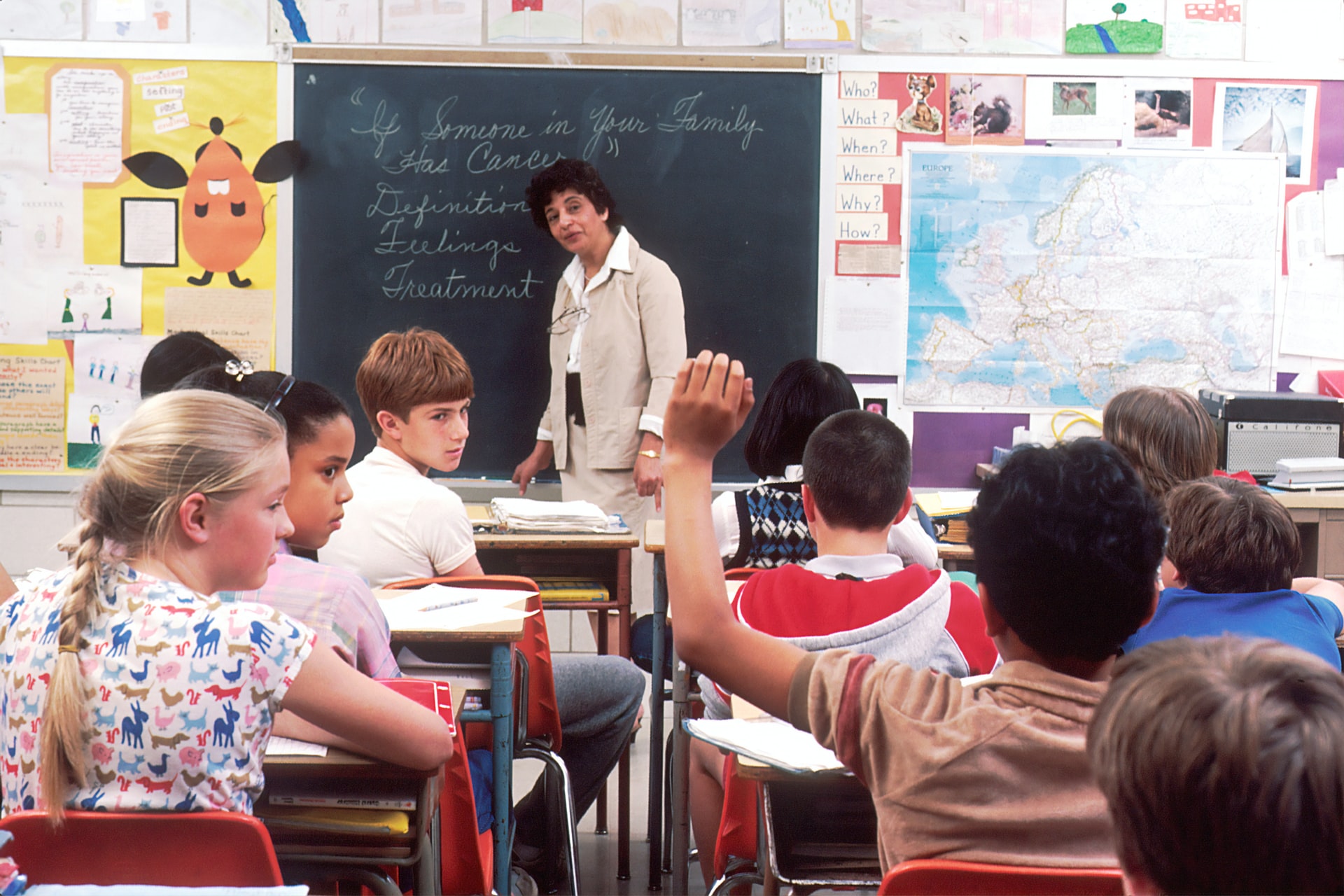
In times of COVID-19: UfU calls for CO2 measuring devices and intensive education in schools on the subject of ventilation
August 26, 2020
After around 30 minutes, the air in a classroom is used up. This is followed by headaches, lack of concentration, restlessness and, in times of the COVID-19 pandemic, an increased risk of infection. Proper ventilation is therefore essential. Especially in schools, there is an increased risk of infection with the COVID-19 virus due to poor air quality. However, there is often a lack of knowledge and opportunities for proper ventilation. In the background paper (German only), the Independent Institute for Environmental Issues calls on education providers to carry out intensive educational work and invest in measures at schools to reduce the risk of infection. UfU has also published a press release (German only) on the subject.
Teaching materials from the KlimaMacher online project
April 08, 2020
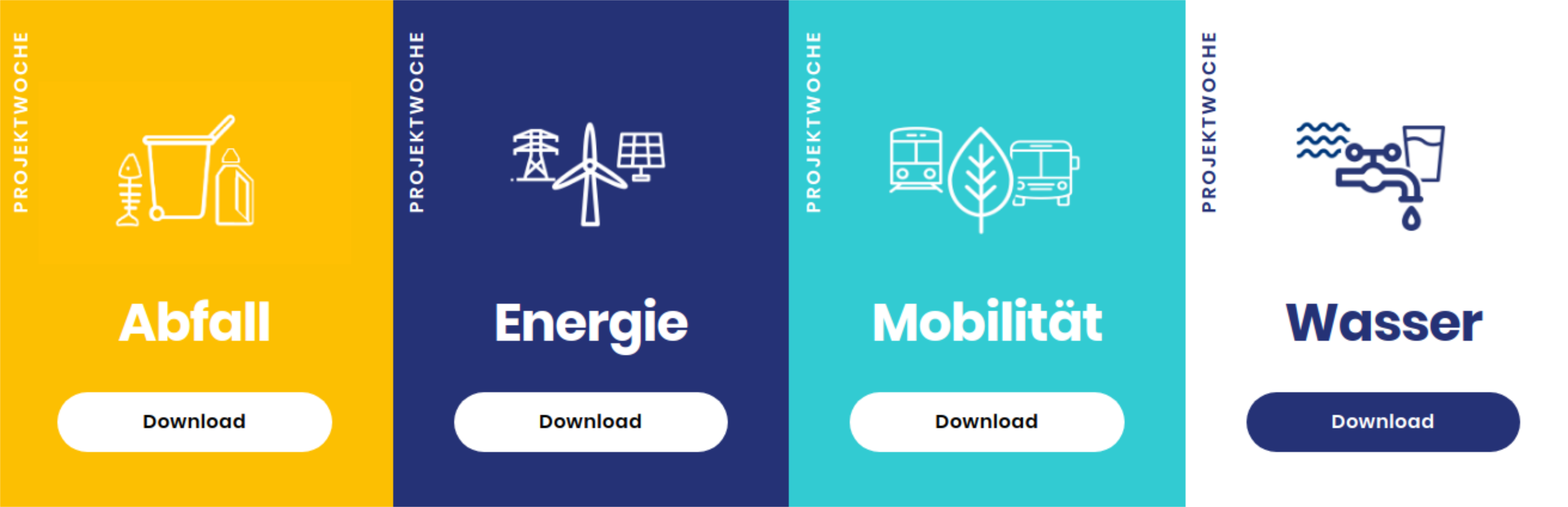
The method guides developed by the Department of Climate Protection and Transformative Education on the topic of climate-friendly Berlin and climate-friendly cities are now online and freely available to interested parties. The teaching materials were created in 2019 as part of the KlimaMacher project in collaboration with Infralab. Infralab is a co-working and co-creation project of Berlin’s infrastructure companies: BSR, BVG, Berliner Wasserbetriebe, GASAG, Stromnetz Berlin and Vattenfall Wärme Berlin. While the participating project partners have provided relevant information and current examples relating to infrastructure in Berlin, the team from the Climate Protection and Transformative Education department has developed the didactic concept for a project week on the topics of water, energy, mobility and waste & energy: Water, Energy, Mobility and Waste & Resources. The project week is made up of various modules so that teachers are not tied to carrying out the whole week, but can choose topics relevant to their lessons. The core elements of the guidelines are the topics: Climate, climate change, how a city works and the need for different infrastructures to work together. The future workshop method is used for pupils to develop their own creative projects. The method instructions for the project week are freely available on the following page:
klimamacher.berlin/seid-klimamacher
You can find more information about Infralab here:
infralab.berlin/
Energy Saving at Schools in Europe - EURONET 50/50 MAX
04 May 2016
EURONET 50/50 MAX aimed at mobilizing energy savings in public buildings through the implementation of the 50/50 methodology in 500 schools and nearly 50 other public buildings from 13 EU countries. Based on our experience in energy saving projects in Germany, UfU developed a 9-step methodology to increase the energy awareness of the building users and to involve them actively in energy–saving actions. Achieved financial savings are to be shared equally between the building users and the local authority which covers the energy bills.
EURONET 50/50 MAX was a continuation of the very successful EURONET 50/50 project which tested the implementation of the 50/50 methodology in over 50 European schools and won the European Sustainable Energy Award 2013! Thanks to EURONET 50/50 MAX, the 50/50 network now spreads across Europe involving new schools and other public buildings.
EURONET 50/50 MAX started in April 2013 and lasted three years. The project was supported by the European Commission through the Intelligent Energy Europe (IEE) programme.
For further information check the project website: www.euronet50-50max.eu
The final guide of the project including information on the methodology and numerous practical examples from all over Europe is available in English as file and as printed brochure: almuth.tharan@ufu.de
Humboldt Fellows at UfU
14 April 2016
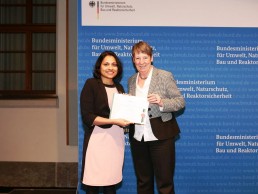
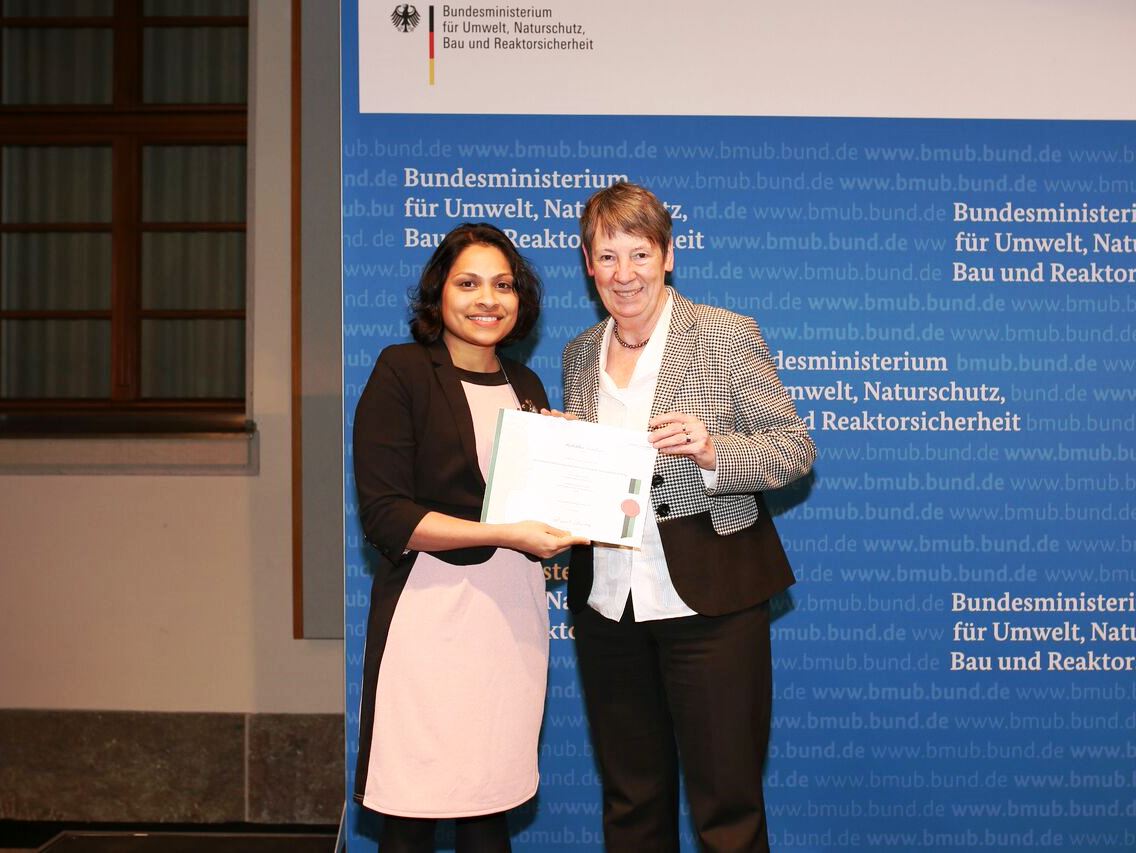
The Fellowship of Lawyer Lekha Sridhar from India ended in March 2016. At a ceremony at the Ministry for Environment, Nature Protection, Construction and Nuclear Safety (BMUB) the Minister Barbara Hendricks thanked the fellows for their terrific work. She also expressed her hopes that the cooperation of the fellows with German organizations on climate protection issues will continue.
Lekha Sridhar held an “International Climate Protection Fellowship” of the Humboldt Foundation and analysed the role of cooperatives in the German Energiewende at the Independent Institute for Environmental Issues. Which impulses her research results could bring for India she summarized in an UfU-Paper: Citizen Energy and Public Participation in Germany’s Energiewende: Lessons for developing countries.
Since March 2016 Thi Binh Minh Hoang from Vietnam is the new Fellow in the “International Climate Protection”- line of the Humboldt Foundation at UfU and is researching potentials of energy plants on contaminated soils.
UfU supports energy saving in Ukrainian schools
02 April 2016
Invited by the Association “Energy Efficient Cities of Ukraine” (EECU), UfU supported the project “School of Energy” by sharing its rich experience in running energy saving projects in German schools in a three day workshop in Lviv, by providing project material and by helping to create a box with technical tools.
“School of Energy” has started in January 2016 and will last until October 2016. In total, 25 selected schools all over Ukraine take part. At the workshop in February, teachers and energy experts were trained by educators from the Ukrainian NGO Svit Osvit and from UfU. The main focus of UfU was to prepare the so called pupils’ energy audits together with the energy experts, who will travel to the schools and run the audits together with the kids. First, UfU introduced the energy experts to working with pupils and the tasks and materials for the energy audits were developed. Finally the teachers and energy experts visited Nadiya School in the outskirts of Lviv to make a test run of the energy audit and to visit a master class with experiments on renewable energies run by pupils of this school
In the meantime, the first pupils’ energy audits did already take place in different cities in Ukraine and they all worked well.
The project “Schools of Energy” is implemented by „Deutsche Gesellschaft für Internationale Zusammenarbeit (GIZ) GmbH“ on behalf of the Federal Ministry for the Environment, Nature Conservation, Building and Nuclear Safety. And UfU is always happy to share its experience in energy saving and climate protection projects at schools with partners from other countries.