


UfU and IASS publish Enabling Policies Report
19. Oktober 2022
UfU and IASS publish Enabling Policies Report
Practical proposals for the implementation of a fair energy transition
COBENEFITS Project
Term
03/2017-02/2020
Cooperation partners
Institute for Advanced Sustainability Studies e. V. (IASS)
Renewables Academy AG (RENAC)
International Energy Transition (IET)
Commissioned by
Federal Ministry for the Environment, Nature Conservation, Building and Nuclear Safety (BMUB)
as part of the International Climate Initiative (IKI)
Contact
Franziska Sperfeld (e-mail: franziska.sperfeld@ufu.de)
The challenge of transformation
Today’s societies are facing enormous challenges as a result of advancing climate change and the associated transformation processes. In addition to the transformation of mobility and the structural change of other industries, the achievement of agreed climate protection goals depends above all on the success of the energy transition.
The fact that the energy transition requires a comprehensive transformation of our energy grids, electricity generation and storage, and thus naturally poses a challenge, is used by some stakeholders as an argument against the climate-friendly transformation of the energy supply. Wrongly: The Policies Report shows that the energy transition is not only worthwhile in climate terms, but also financially, socially and economically.
The energy transition has positive side effects
In the future, it will be of central importance whether the energy transition is designed to be socially fair. Only then can change lead to lasting acceptance among the population. In our COBENEFITS project, we have therefore investigated to what extent the conversion to a sustainable power supply through renewable energies has positive side effects on other economic and social sectors and how these can be used. For example, a rising share of renewable energy can lead to less air pollution, more energy security and future-proof jobs.
If the energy transition is accompanied by smart legislation and good policies, these positive side effects can be enhanced and fairly distributed among communities. A central finding of the project is: The co-benefits (and thus e.g. savings) mostly arise outside the department that is responsible for planning the energy transition and thus has an additional effort at the beginning. Therefore, it is essential that government institutions cooperate across administrative departments in the future.
The Enabling Policies Report
In order to be able to defend the energy transition against critical voices from within the own economy, policy areapolitics and society, it is of central importance for many countries to back up the above argumentation of positive side effects with scientific studies. This has been done in the COBENEFITS project.
The COBENEFITS Enabling Policies Report is the official final report of the project. It provides an overview of policy measures that have a high potential to fairly exploit the co-benefits of renewable energy in the power sector. The report summarises findings and recommendations from five COBENEFITS project years and more than 15 studies from more than 7 countries. As such, it is a practical tool for policy makers, researchers and policy advisors to think climate change mitigation and socio-economic development together in practice.
Infographics
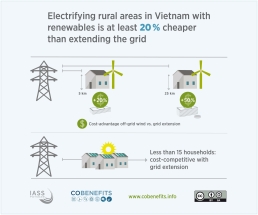
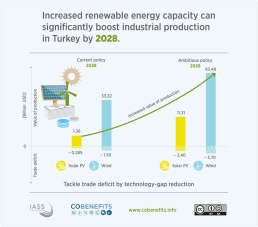
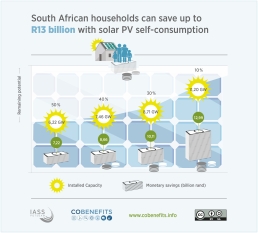
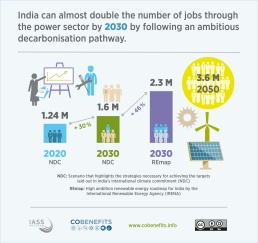
More infographics of the COBENEFITS project are available here: https://www.cobenefits.info/infographics-gallery-2/
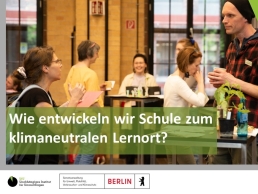
Schools as climate-neutral places of learning? - 24th symposium on climate protection in schools
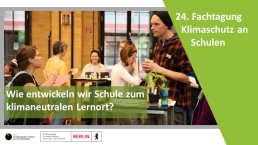
October 18, 2022
Schools as climate-neutral places of learning?
24th symposium on climate protection in schools
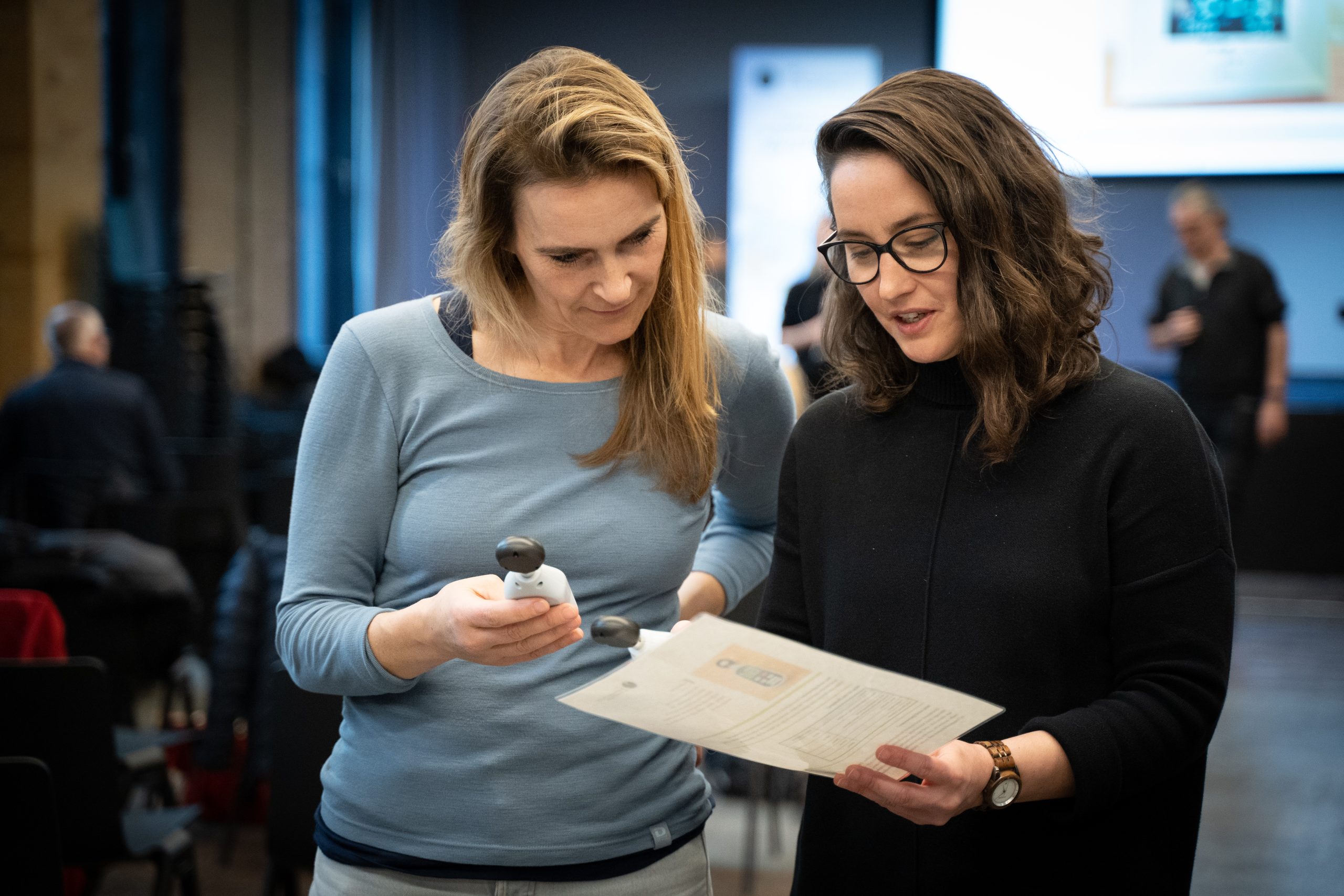
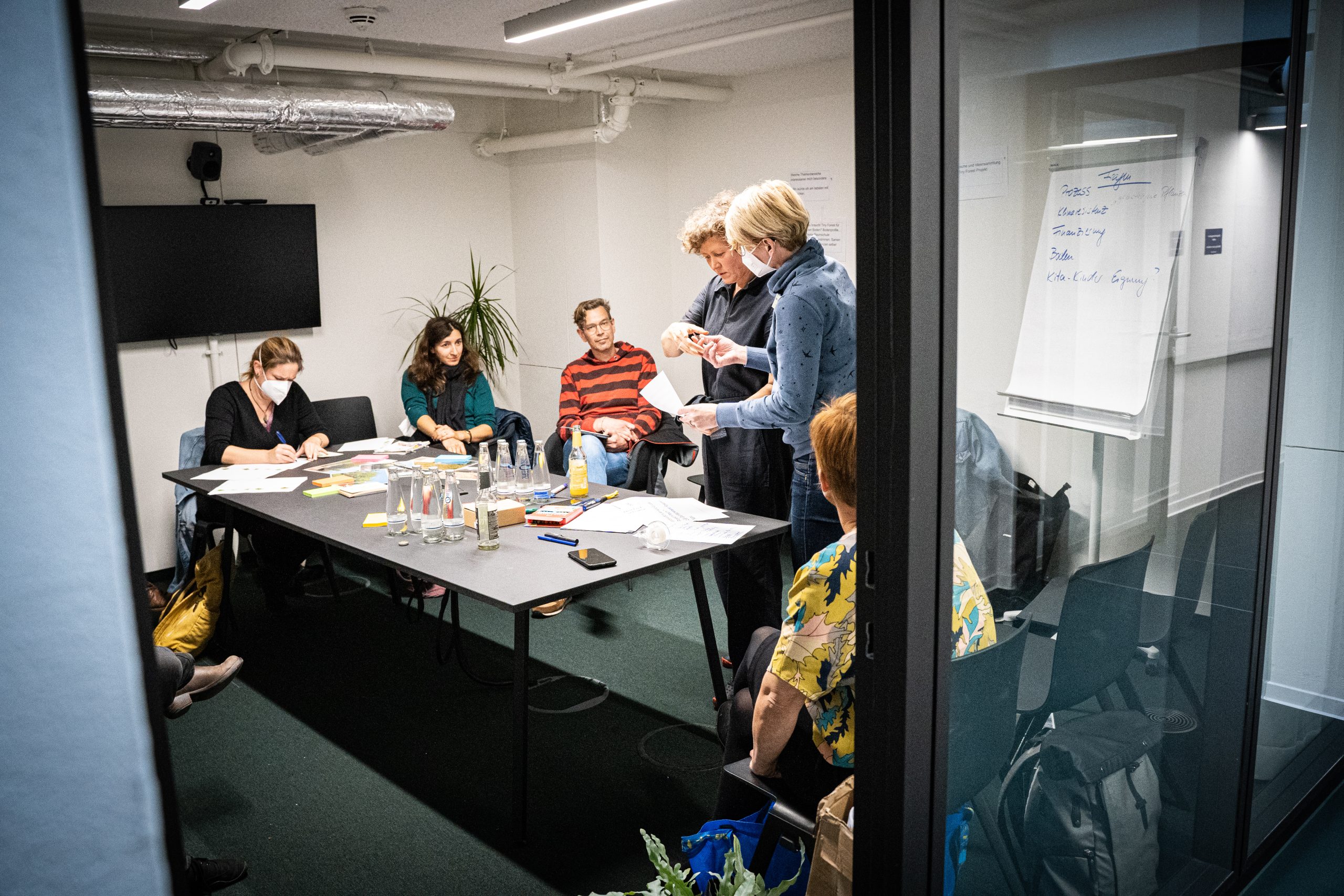
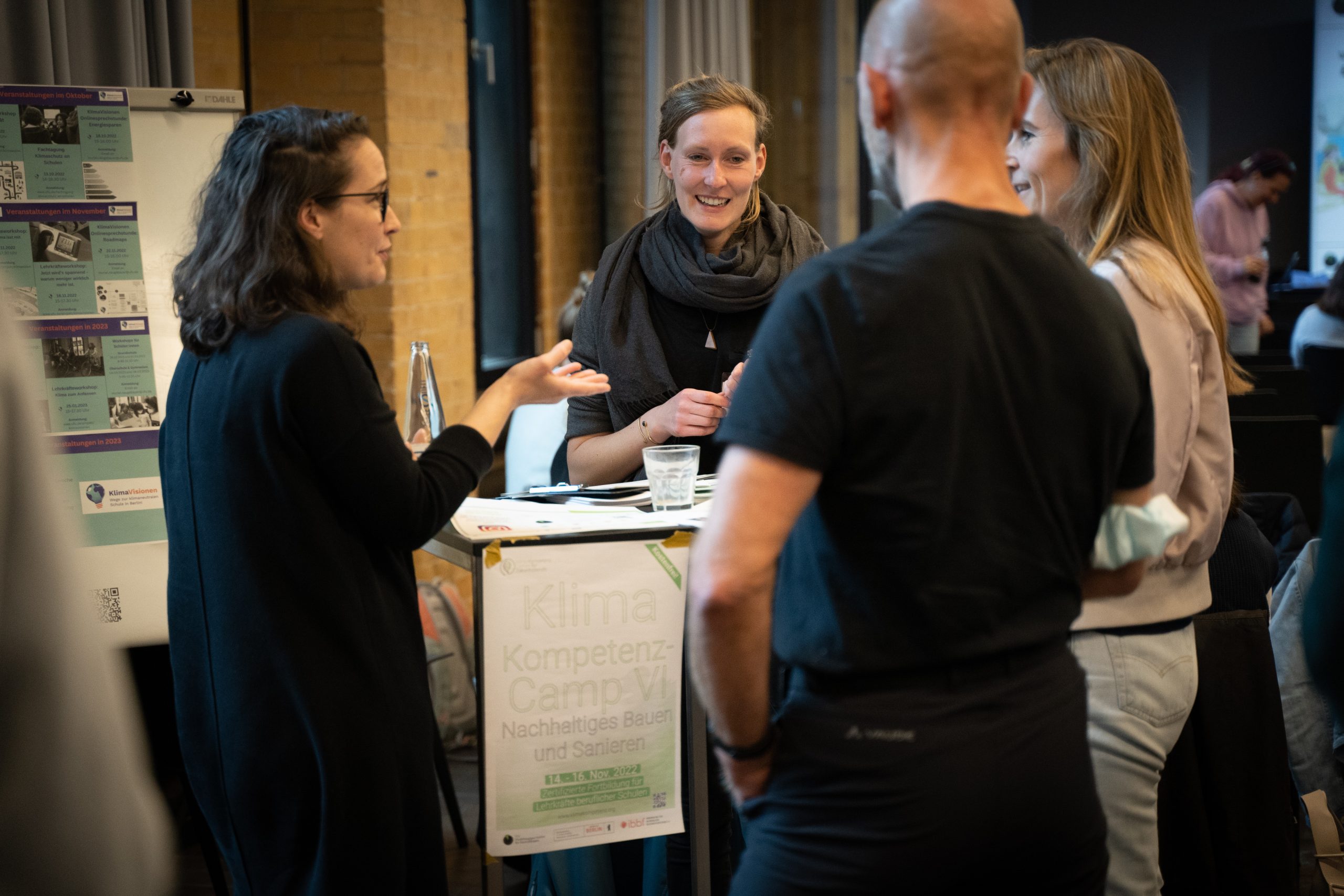
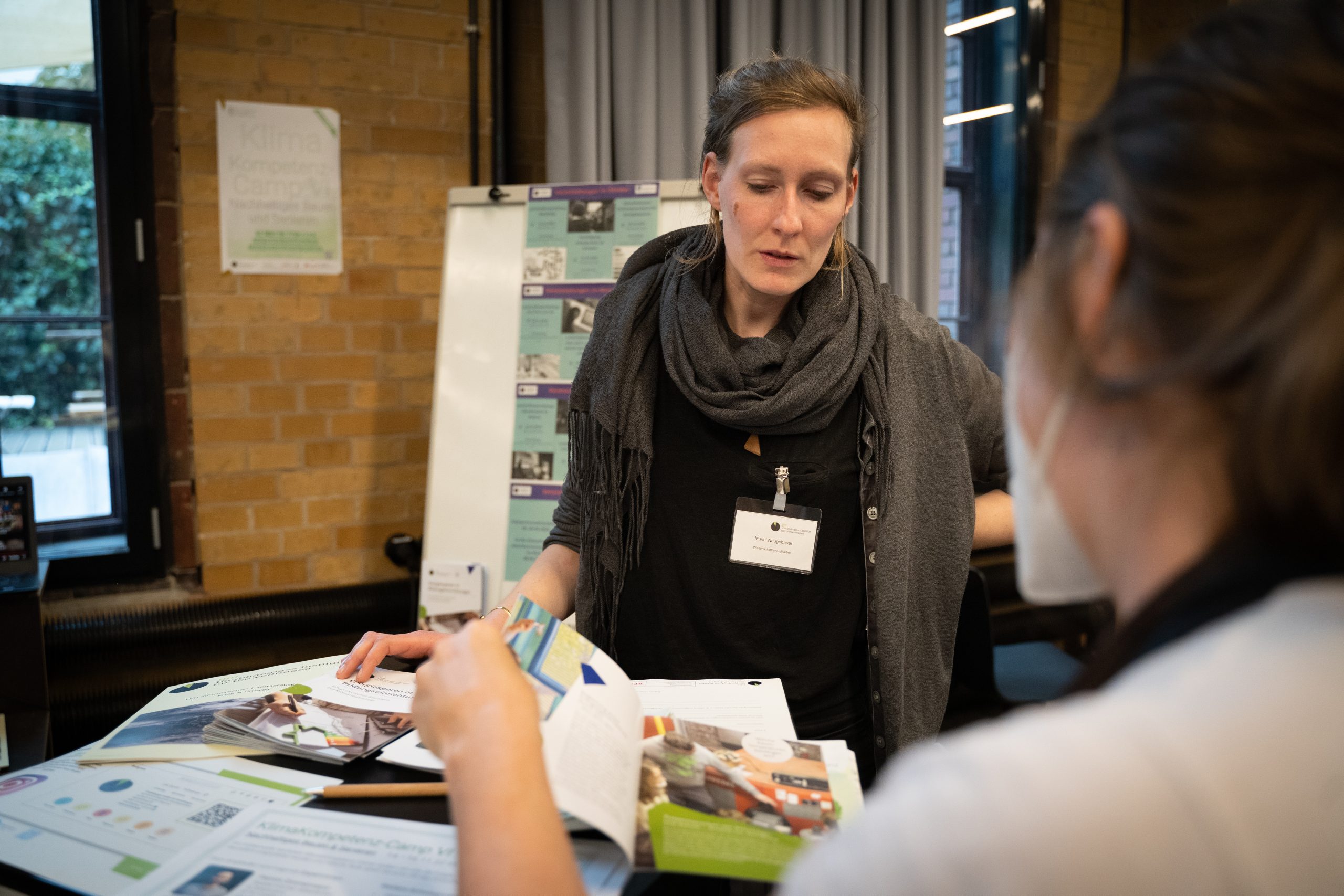
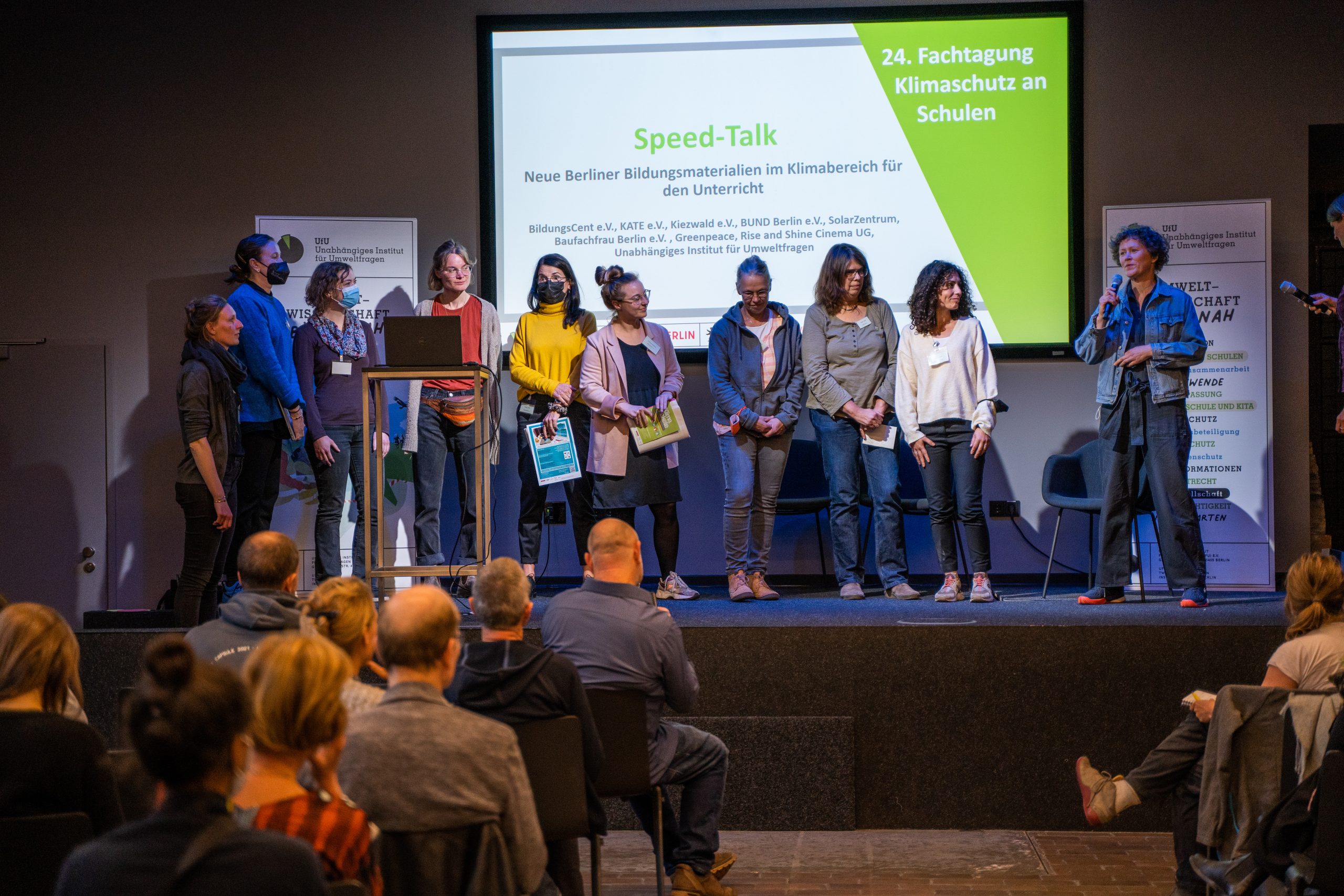
At the 24th symposium on climate protection in schools this year, the transformation of schools towards climate neutrality was discussed. The annual conference organized by the Independent Institute for Environmental Issues is one of the most important events on the topic of climate protection in connection with schools.
Social transformation must also take place in schools
School is a central part of young people’s lives in Germany. Children and young people spend between ten and thirteen years of their youth at school and work on average more than 38.5 hours a week in or for school. This means that school is like a full-time job. It is therefore all the more important that key social changes are also reflected in schools in order to allow children and young people to participate in social life and prepare them for these developments. Schools are places of learning and should act as role models in these transformation processes. This also applies to the call for our economy and society to be converted to climate neutrality. Schools must not be excluded from this development. After all, they are among the largestCO2 emitters from public buildings due to their very high numbers alone. The issue of climate neutrality is therefore extremely important for consumption reasons alone if countries want to achieve their climate targets.
Schools need support
How do we develop schools into climate-neutral places of learning? This was the key question at the 24th symposium on climate protection in schools organized by the Independent Institute for Environmental Issues. The answer is by no means trivial, as the mix of participants at the conference shows. Teachers, school administrators, school building consultants and employees from district offices and administrations as well as representatives from the environmental coordination offices for environmental education attended. All participants at the symposium agreed on one thing: schools cannot and must not be left alone with the transformation to climate neutrality. They are simply too complex for that. Numerous factors such as the energy efficiency of buildings, school routes, schoolyards, energy supply, technical equipment and many more must be considered during the transformation and require technical expertise and creativity in finding solutions.
The totality of ideas and educational work make the difference
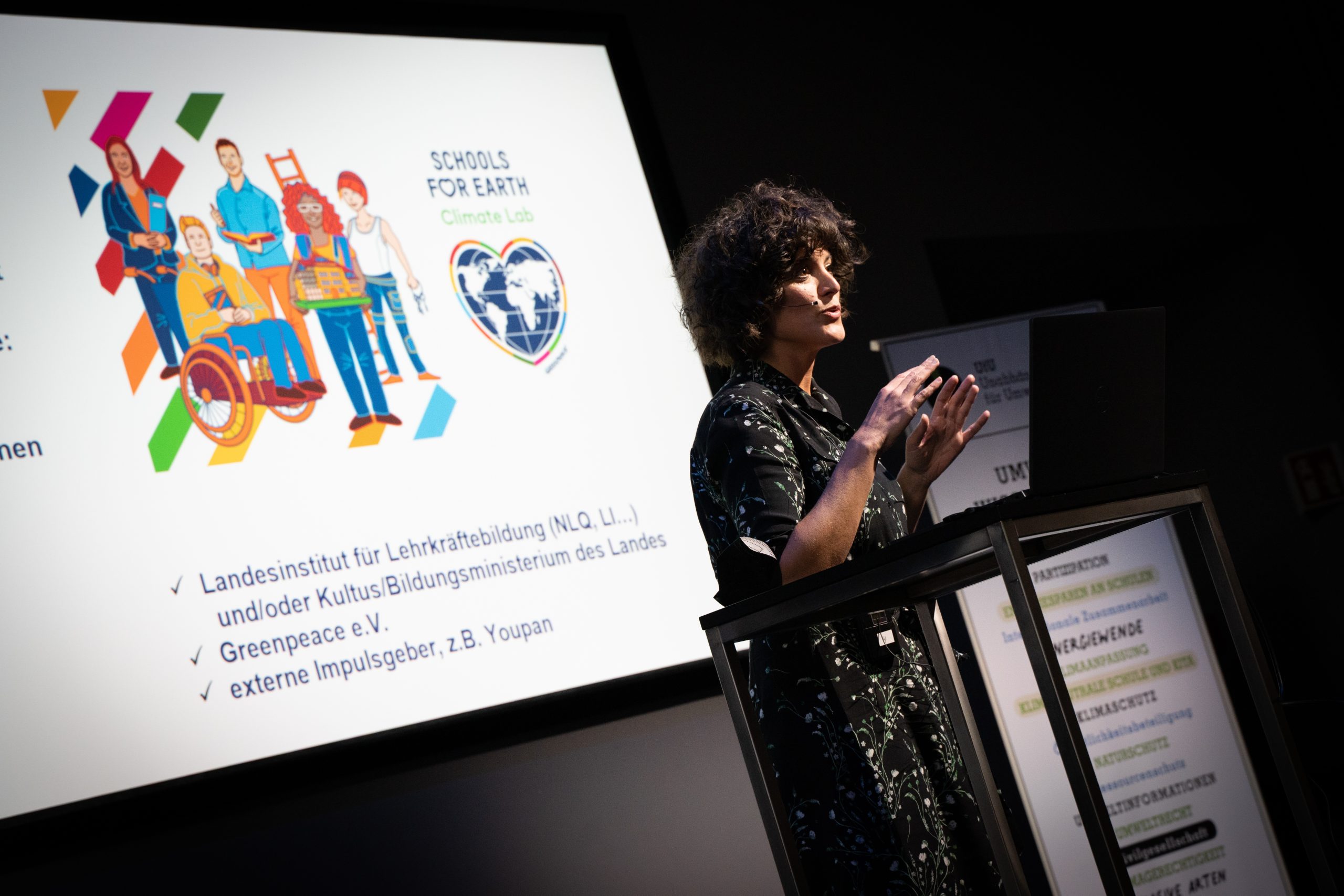
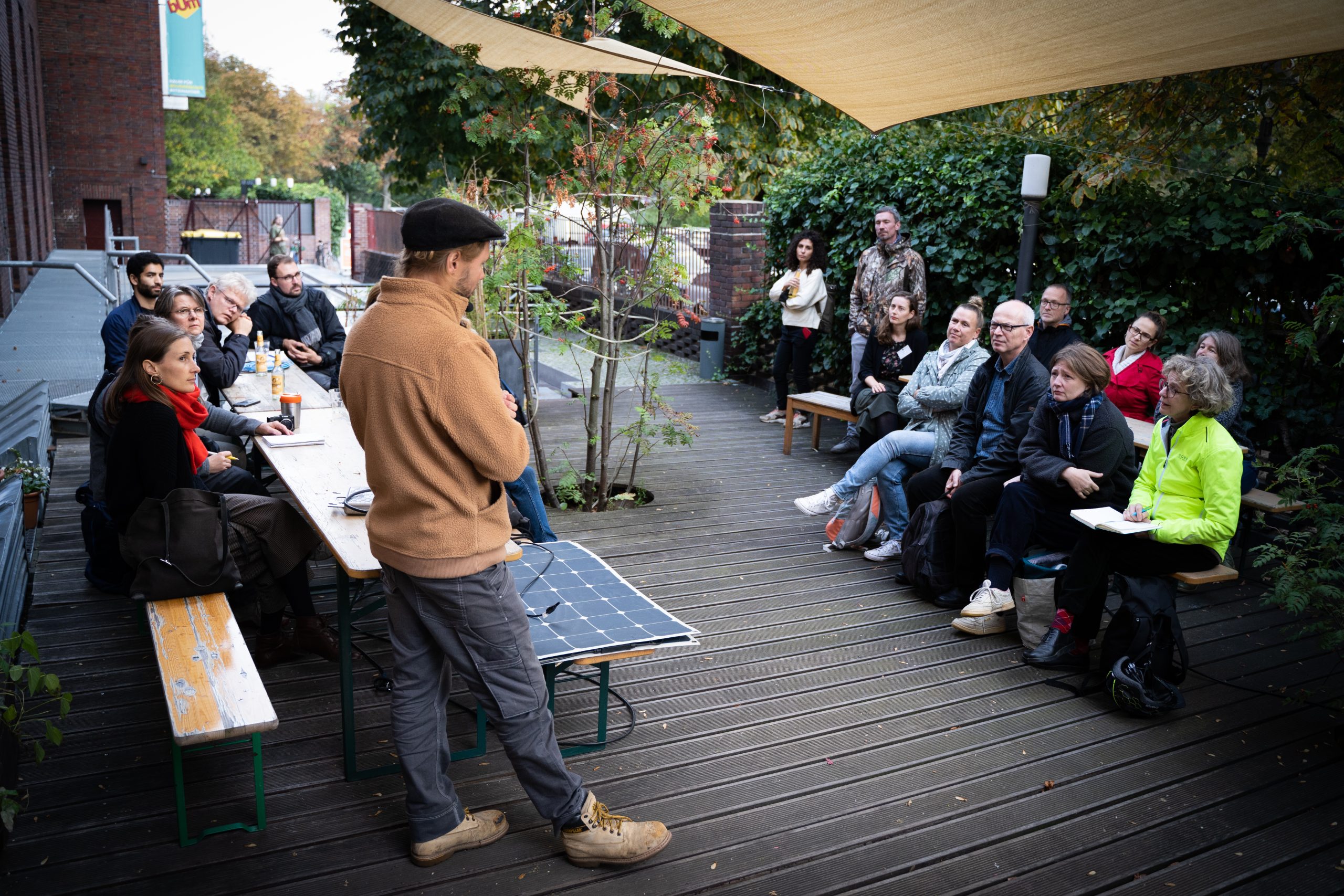
In order to achieve a climate-neutral school, it is therefore important to have all the ideas for the various challenges. Various initiatives presented their solutions for schoolyard reforestation, balcony power plants, solar modules and school mobility and traffic education at the symposium. The latter shows another important aspect of the transformation: educational work. As a central place of learning for young people, the transformation of schools must also be incorporated into teaching. In this way, young people are involved in the development and can understand the changes at school.
Initiatives represented at the symposium
- Greenpeace with the Schools for Earth and ClimateLab project
- Kiezwald e.V. with schoolyard reforestation
- BUND school mobility and traffic education
- Solar center with balcony power plants
- BildungsCent e.V. with Climate Packages and Climate Data School
- Construction expertswith cLabs
- Kate e.V. with the Climate Future Conference



New film about UfU's energy-saving projects in schools - Protecting the climate with children!
UfU has had a new film produced for its long-standing energy-saving projects. In it, we explain how energy-saving projects in schools work and what is important. In the end, a really nice film was made with the children. In light of the current challenges, energy-saving projects in schools are more important than ever!
September 26, 2022
New fifty/fifty film – Saving energy in schools
UfU has been carrying out energy-saving projects in schools in Germany and internationally since 1996. In total, over 3,000 people have taken part in energy-saving projects with a wide variety of partners. In the fifty/fifty energy-saving projects, we visit schools to work with pupils on topics such as climate, heating, electricity, energy consumption and renewable energies. The aim is to significantly reduce consumption at schools. To this end, there are several teaching units that are carried out as part of science lessons, for example. UfU employees visit the school and carry out teaching units with the children in various formats.
Children are equipped with measuring devices, visit the school’s heating system, measure temperatures, light andCO2 concentration and thus embark on an energy tour of their own school. In class, the consumption of the school is discussed and the children are made aware of the effect of their own user behavior on this consumption. Of course, the aim is also for the children to take what they have learned home with them and implement it in their own behavior in the long term. In addition, the pupils motivate other schoolmates to help save energy through public relations work within the school. In this way, multipliers are trained at an early stage. The energy-saving projects are carried out together with the school and the school authority, i.e. the district and local authority. This is because lower consumption also reduces costs for the school authorities. Schools receive part of the money saved back from the school authorities so that they can use it as they wish. This creates positive incentives for everyone involved to reduce consumption at the school as much as possible. The savings from energy-saving projects are between 4 and 15 percent.
More about fifty/fifty? Our project flyer as PDF
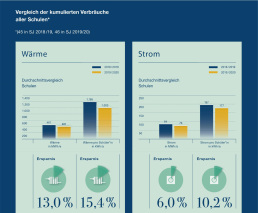
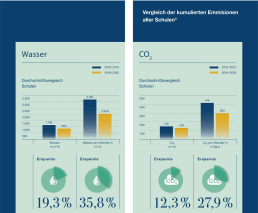
Savings successes in Potsdam as an example:
Time article: How the teacher makes the difference when it comes to heating
Against the backdrop of the current gas emergency, the Berlin Institute called for energy-saving programs to be made mandatory for all schools in Germany. Now Ms. Alexandra Endres(https://www.alexandraendres.de/) also reports on the energy-saving projects in ZEIT Online: https://www.zeit.de/wissen/2022-08/energiesparen-schulen-erdgas-oeffentlicher-energieverbrauch

EIA in comparison: Administrations need better software, platforms must become smarter!
23. September 2022
At the second workshop on formal digital public participation in our Aarhus-Strong project we looked at the different designs of EIA portals in Germany, Austria, Estonia and Slovenia. The Aarhus-Strong project aims to actively promote digital public participation in various EU Member States and to formulate national action strategies for the further development of the portals. To this end, UfU is cooperating with the Slovenian NGO Pravno-informacijski centre nevladnih orga-nizacij / Legal Centre for the Protection of Human Rights and Environment among others.
Public participation in infrastructural projects is an essential element of a modern democracy and is assured to EU citizens by the Aarhus Convention. In the digital age, but also in times of global pandemics, it is necessary to make information easily accessible digitally so that citizens can exercise their rights. The so-called EIA portals, in which information for large infrastructural projects such as motorways, power plants or factories are made availabe and the results of the environmental impact assessment (EIA) are listed, are crucial for this access to information. Ideally, citizens can comment on these projects and raise their objections at so-called public hearings.
In the second workshop, in addition to a competition for young professionals, the participation situation in Germany, Estonia and Slovenia was examined.
Germany & Austria
Even though the rights of the Aarhus Convention apply to all EU citizens, the degree of digitisation of EIA portals in the different EU Member States still varies considerably. Dr Gesa Geißler from the University of Natural Resources and Life Sciences in Vienna, examines digitisation trends for EIA portals in Germany and Austria. In her opinion, the use of social media as an information and discussion tool in infrastructure projects is desirable, but is still used too rarely. In addition, UfU has already established in past projects (Monitoring Report 2019) that the procedures are only insufficiently mapped in the EIA portals. In 2019, of approximately 1,900 new approval procedures for infrastructure projects in Germany, only 409 procedures were actually entered into the corresponding EIA portals. This corresponds to a rate of 21.5 percent.
Estonia
A good counter-example is provided by Estonia, which is considered a pioneer in digitisation efforts. Ms. Kadi Jette Tamjärv, Environmental Consultant from Estonia and member of the Estonian Association of Environmental Impact Assessment in Estonia, presented the handling in her country. Compared to most EU Member States, the information is prepared in a much better and more accessible way. Estonia can also look back on longer and above all positive experiences with digital and hybrid discussion meetings, which also enables citizens in rural regions to exercise their right to participation without long travel times. Examples like these and others will be included in the participation guide for environmental authorities in EU Member States, which will be developed in the course of the Aarhus Strong project.
Slovenia
Mr. Aljoša Petek from the Legal Centre for the Protection of Human Rights and Environment reported on the status in Slovenia. Here, the implementation of the Aarhus requirements is still very slow. Although the relevant portals have been set up, documents cannot be viewed or downloaded via the portals, but must be requested from the relevant authorities.
„European Innovation Lab“ competition
In addition to the exchange of experts on the participation situation in the different Member States, the winner of the “European Innovation Lab”, a competition organised as part of the Aarhus-Strong project,was awarded. The aim of this competition was to involve young people with digital experience and different professional backgrounds in the design of participation platforms of the future and to encourage them to develop new approaches. Ms Freia Antonia Weiß took first place with her model “Discourse”. The student emphasised that EIA portals would only be accepted by the masses if there were sufficient opportunities for exchange between the participants. In most EU Member States, however, this is still a vision for the future.

Further procedure
In the next steps of the project, the situation of public participation in selected EU Member States will be examined in more detail on the basis of country reports and both “best” and “worst practices” will be identified. This will be followed by further expert exchanges and workshops , the results of which will be used to develop an innovative participation guide for environmental authorities in EU Member States.
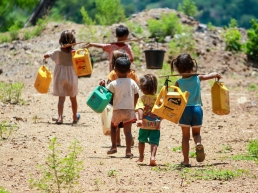
World Children's Day - The climate crisis is also a crisis for children's rights
September 20, 2022
Zum Weltkindertag – Die Klimakrise ist auch eine Krise der Kinderrechte
Die fortschreitende Umweltzerstörung inklusive des menschengemachten Klimawandels mindert die Lebenschancen unzähliger Menschen – insbesondere die jüngsten Mitglieder der Gesellschaft sowie kommende Generationen sind betroffen. Der von UNICEF entwickelte Children´s Climate Risk Index (CCRI) zeigt dies auf schockierende Weise: Fast eine Milliarde Kinder – fast die Hälfte aller Mädchen und Jungen auf der Erde – leben in den 33 Ländern, welche durch Auswirkungen des Klimawandels „extrem stark gefährdet“ sind [1;2]. Bereits heute sind Kinder und Jugendliche am stärksten von den Auswirkungen der Klimakrise betroffen – obwohl sie am wenigstens für diese verantwortlich sind. Dazu sind Phänomene von Climate- sowie Eco-Anxiety unter jungen Menschen immer häufiger zu beobachten [3]. Kinder gelten als besonders vulnerabel. Doch selbst dem Kinderrecht auf Gesundheit wird bisher nicht ausreichend Rechnung getragen. Bereits in der Schwangerschaft und in den ersten Lebensjahren sind Kinder gefährlichen Schadstoffbelastungen ausgesetzt – mit möglichen direkten und langfristigen negativen gesundheitlichen Folgen [4].
Im Sinne der ökologischen Kinderrechte müssen also die Themen Kinderrechte und Umwelt- sowie auch Klimaschutz stärker miteinander verschränkt werden. Unter ökologischen Kinderrechten versteht man das Recht eines jeden Kindes, in einer gesunden und intakten Umwelt aufzuwachsen, sodass ein gesundes Leben wie auch die volle Potenzialentwicklung ermöglicht wird [5].
In der UN-Kinderechtskonventionen werden Umweltfragen zwar thematisiert, etwa in Hinblick auf Gesundheit (Art. 24 2 (c)) und Bildung (Art. 29. 1(e)), ein direktes Kinderrecht auf eine gesunde Umwelt ist jedoch bislang nicht festgeschrieben. In der Praxis werden Umweltfragen in der Kinderpolitik sowie Kinderfragen in der Umweltpolitik häufig nicht beachtet. Daran muss sich etwas ändern. Dazu braucht es eine effektive Gesetzgebung mitsamt Vorschriften, die sich an planetaren Belastungsgrenzen sowie an sozialen Mindeststandards orientiert [6; 7].
Eine wichtige Rolle spielt dabei die Gerechtigkeitskomponente: Die Ungleichheiten in Bezug auf Umweltbelastungen von Kindern schlagen sich auch sozialräumlich nieder – auch innerhalb von deutschen Städten [8]. Außerdem müssen Kinder unterschiedlichen Alters, Geschlechts und sozialer Herkunft viel häufiger an Entscheidungen und Maßnahmen beteiligt werden, um an der Gestaltung ihrer Zukunft mitgestalten zu können. Bisher wird ihrem Recht auf Partizipation noch viel zu wenig nachgekommen – obwohl das Interesse der jungen Generation am Klimawandel und Umweltzerstörung hoch ist.
Auch das UfU hat sich bereits in unterschiedlichen Projekten mit dem Themenfeld Umweltgerechtigkeit und damit mit sozialräumlichen Ungleichheiten bestimmter Umweltdimensionen wie Lärm, Stadtgrün, Luftverschmutzung u.a. auseinandergesetzt. Das bald startende Verbundprojekt gemeinsam mit der BUNDjugend MeiFaiR nutzt das Konzept der Umweltgerechtigkeit als Handlungsansatz für einen jugendgerechten Strukturwandel im Mitteldeutschen und im Lausitzer Revier.
Quellen und zum Weiterlesen
[1] UNICEF (2021): The Climate Crisis is a Child Rights Crisis. Online verfügbar https://www.unicef.org/reports/climate-crisis-child-rights-crisis (letzter Zugriff: 14.09.2022)
[2] Schulte-Basta; D. 2021): Kinder haben ein Recht auf eine gesunde Umwelt. Heinrich Böll Stiftung. Online verfügbar: https://www.boell.de/de/2021/09/17/kinder-haben-ein-recht-auf-eine-gesunde-umwelt (letzter Zugriff: 8.9.2022)
[3] Hickman et al. (2021): Climate anxiety in children and young people and their beliefs about government responses to climate change: a global survey. Lancet Planet Health (5): e863-73.
[4] National Coalition Deutschland (o.J.) Die Umsetzung der UN-Kinderrechtskonvention in Deutschland. 1d Ökologische Kinderrechte. Online verfügbar: https://umsetzung-der-kinderrechtskonvention.de/1-d-oekologische-kinderrechte/ (letzter Zugriff: 8.9.2022)
[5] National Coalition Deutschland (2016): Kinderrechte und Umwelt Ein Diskussionsbeitrag der National Coalition Deutschland – Netzwerk zur Umsetzung der UN-Kinderrechtskonvention. Berlin.
[6] Rockström, J. et.al. (2009): A safe operating space for humanity. Nature 463: 472-475.
[7] Raworth, K. (2012).A Safe and Just Space for Humanity: Can We Live within the Doughnut? Oxfam Discussion Papers.
[8] Helbig, M.; Salomo, K.(2021): Eine Stadt – getrennte Welten? Sozialräumliche Ungleichheiten für Kinder in sieben deutschen Großstädten. Herausgegeben von der Heinrich-Böll-Stiftung, dem Wissenschaftszentrum Berlin für Sozialforschung (WZB) und dem Deutschen Kinderhilfswerk (DKHW) (letzter Zugriff: 08.09.2022)

UfU dog project on TV: Nano magazine shows an article about IGAMonDog!
September 06, 2022
UfU dog project on television: Nano magazine shows an article about IGAMonDog!
Since April 2021, UfU has been running its popular IGAMonDog project, which deals with invasive plant species and dogs’ noses. More precisely: dogs are supposed to detect invasive species and thus provide scientists with important data on the spread of the plants. To this end, the first dog teams were trained in the pilot project to find invasive plant species in the wild. Invasive and alien species (IAS) are increasingly spreading and not only threaten other species or their habitats, but also have an impact on the economy and the health of the population. As young plants in particular can easily be overlooked by humans, sniffer dogs could help to find them in the future. Especially in sensitive areas, such as nature reserves, this approach has great potential to prevent the spread. The television team from Nano Magazin on 3Sat accompanied our work with the dogs and filmed an exciting report about the project:

UfU in ZEIT Online: How the teacher makes the difference in heating
August 22, 2022
UfU in ZEIT Online: How the teacher makes the difference in heating
The Independent Institute for Environmental Issues – UfU e.V. has been running energy-saving programs for schools to reduce consumption for over 25 years. In light of the current gas emergency, the Berlin-based institute has called for energy-saving programs to be made mandatory for all schools in Germany. Now Ms. Alexandra Endres(https://www.alexandraendres.de/) also reports on the energy-saving projects in ZEIT Online: https://www.zeit.de/wissen/2022-08/energiesparen-schulen-erdgas-oeffentlicher-energieverbrauch
Press release: UfU calls for energy saving programs for schools!
August 22, 2022
UfU – Press release: UfU Berlin calls for energy saving programs for schools throughout Germany!
The Independent Institute for Environmental Issues – UfU e.V. has been running energy-saving programs for schools to reduce consumption for over 25 years. In light of the current gas emergency, the Berlin-based institute is calling for energy-saving programs to be made mandatory for all schools in Germany.
Schools have extremely high energy requirements and are among the largest energy consumers in the public sector. Many different user groups, few energy managers at the building owners and a relatively old building stock often drive up the energy consumption of schools unnecessarily. This is why the Independent Institute for Environmental Issues (UfU) developed energy saving programs (fifty/fifty) for schools back in the 1990s. On average, 8 percent of heating energy and 2 percent of electricity consumption can be saved in schools. Originally aimed at reducing CO2 emissions, the program takes on a new relevance due to the risk of a gas emergency in winter: “Schools mostly heat with natural gas or district heating. However, district heating is also primarily produced from natural gas. In Berlin, for example, the proportion of natural gas used for district heating is 73.9 percent. This means that there is an urgent need to reduce the energy consumption of schools, especially due to the risk of a gas shortage,” says Florian Kliche, Managing Director of UfU and responsible for the Energy Efficiency & Energy Transition department. Schools consume an average of 80 KWh/m² or 420 MWh of heating energy per year. That is equivalent to the consumption of 85 households! With over 42,000 schools in Germany, the potential for savings across the country is enormous and can make a significant contribution to reducing gas consumption in Germany if the energy-saving programs are made mandatory. UfU is therefore calling for the programs to be made mandatory for schools in Germany. This needs to happen sooner rather than later so that enough schools have taken part in the programs before it gets colder again. The energy-saving programs consist of a mix of practical measures and educational lessons to change behaviour: “One direct measure that we carry out in almost all schools is adjusting the heating system together with the janitors. Most schools will still be far too warm in 2022 – on average 2-3°C. Every degree Celsius saved reduces energy consumption by 6%. In energy-saving lessons, the pupils are given various measuring devices and join us on energy tours of the schools to discover potential savings. This creates an awareness of energy waste at school among the pupils,” explains Oliver Ritter, project manager of the energy-saving projects. In addition to the various measures to reduce heating energy and electricity consumption, the programs also deal with water consumption and other resources in schools.
Savings successes at Potsdam schools in a year-on-year comparison:
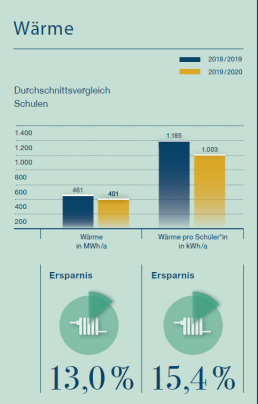
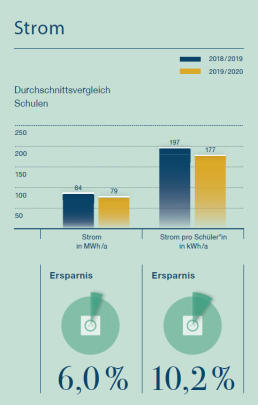
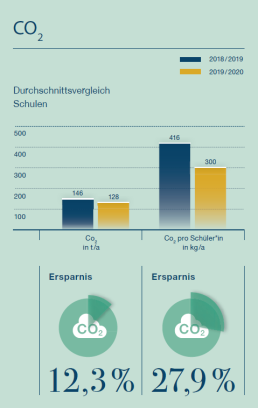
The energy-saving programs (fifty/fity) motivate schools to save energy in everyday school life by changing their user behavior. At the end of each school year, the schools involved in the project receive cash as a thank-you for protecting the climate: half of the energy costs saved are then paid out directly to the participating schools by the school authorities. Today, fifty/fifty is the brand name for all forms of energy-saving projects with a financial incentive system. UfU has already implemented the programs at over 3,000 schools in Germany together with partners. UfU has a broad network of partners in this field to cover the needs of Germany as a whole. The Independent Institute for Environmental Issues is a scientific institute and a citizens’ organization with the aim of analysing and promoting environmental policy developments in a citizen-oriented and time-critical manner, with a focus on the new federal states. Further information on UfU can be found at https://www.ufu.de. The contact person for the project is Florian Kliche(florian.kliche@ufu.de). Please send press inquiries to Jonas Rüffer(jonas.rueffer@ufu.de).

UfU criticizes funding cuts in Berlin school construction offensive!

August 15, 2022
UfU criticizes funding cuts in the Berlin school construction offensive – a rethink is needed!
From the point of view of environmental associations, the Berlin school construction offensive is a program with considerable gaps. Nevertheless, renovations and the construction of new schools in Berlin are important. The fact that funding for the program is now being cut is another step in a chain of failures and poor planning.
Berlin not only needs new schools, existing schools also urgently need to be renovated. However, the program planned for this purpose, the Berlin school construction offensive, falls far short of the capital’s climate targets from a climate protection perspective. The current cut in funding for the program will further exacerbate this situation. UfU is calling for an urgent rethink, both in the school construction offensive and in the construction projects of Berlin schools that have already been approved for years. In August 2021, Berlin amended the Berlin Climate Protection and Energy Transition Act, making it one of the most ambitious climate protection laws in Germany. The targets will be drastically tightened and the specified timeframe significantly shortened. Among other things, new targets are also defined for compliance with KfW efficiency house standards for public buildings:
– Section 10 (1) EEC stipulates compliance with the KfW Efficiency House 40 standard for new public buildings.
– Section 10 (2) EEC stipulates compliance with the KfW Efficiency House 55 standard for major renovations of public buildings.
School buildings whose planning documents were approved before 01.01.2025 are exempt from these standards. The Berlin school construction offensive, the largest investment project of the last and current legislative period, is not affected by this law. As planning procedures and construction projects for the schools are applied for and approved years in advance, the projects in the school construction offensive remain unaffected by the above-mentioned KfW efficiency house standards. As a result, Berlin is literally building to low standards in contravention of the Climate Protection and Energy Transition Act. The current funding cuts will further exacerbate this problem: “The construction projects, which are already questionable from an environmental point of view, will not simply be canceled as a result of the funding cuts, but merely postponed. This means that school construction projects that are technically outdated will still be realized in Berlin in a few years’ time,” says Marlies Bock, Head of Energy Efficiency & Energy Transition at UfU. UfU is calling for an urgent rethink if Berlin does not want to fall behind in terms of building technology. It cannot be assumed that schools will be refurbished twice in a very short space of time. Building schools with old efficiency standards today will lead to the climate targets not being met. Instead, the projects that have already been approved must be updated with regard to the Climate Protection and Energy Transition Act and the urgently needed funds for the school construction offensive must be made available. Delaying the refurbishments, as is currently the case, will lead to an outdated building stock generating significantly higher energy consumption than would be necessary. UfU has already published studies and options for action in this regard.
- Analysis of the Berlin Climate Protection and Energy Transition Act: A law with gaps – The Berlin Climate Protection and Energy Transition Act
- School refurbishment in the context of Berlin’s climate targets: Background, challenges and options for action
The Independent Institute for Environmental Issues is a scientific institute and a citizens’ organization with the aim of analysing and promoting environmental policy developments in the new federal states in a citizen-oriented and time-critical manner. Further information on UfU can be found at https://www.ufu.de. The contact person for the Berlin school building campaign is Marlies Bock(marlies.bock@ufu.de).
Explaining (renewable) energies to daycare children!
June 24, 2022
Explaining (renewable) energies to daycare children!
What characteristics do Lisa Light and Wilma Warmth have and why do we call them sun children?
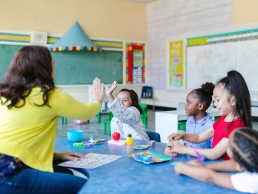
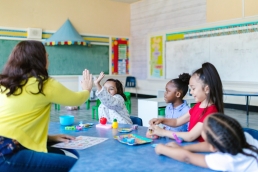
Even when children are still quite young, you can explain complex things like “energy”, “waste”, “saving electricity” and “renewable energies” to them. However, this is not easy and requires experience. Today, there are many committed educators and teachers for whom topics such as climate change, climate protection and renewable energies are important and who would like to teach them to their pupils. However, this requires the right teaching materials, illustrative games and knowledge about the subject matter. This is exactly what UfU does in its energy-saving projects, for example in Lübben and Luckau in southern Brandenburg. In educational training courses, teachers learn how to introduce children to these complex topics and which playful methods children can use to experience and learn about solar energy, heat and wind, for example. An important part of this training is the formulation of playful questions that encourage children to experiment:
- Why can Lisa light pass through some objects and not others? And why does a shadow appear? Can I catch it?
- How does Wilma heat the earth and why does it sometimes work better and sometimes worse?
- How can I roast marshmallows without lighting a fire or using electricity?
- What magic is hidden in the play of colors of the rainbow and how can I write with a magnifying glass?
By making the properties and effects of energy tangible on the basis of low-threshold games and experiments, it is possible to bring the otherwise rather abstract topic of energy and how to deal with it closer to preschool children. As part of the project, the teachers receive lots of teaching materials that they can take back to their daycare centers. These training courses are repeated at regular intervals. In addition to the aim of raising children’s awareness of energy and, in particular, energy waste at pre-school age, the project also aims to achieve savings in the facilities’ consumption of resources. There are also energy tours of the buildings and specific project days on the subject. In Lübben and Luckau alone, five schools, one after-school care center and eleven daycare centers are participating in the program.
https://www.fifty-fifty.eu/projekt/energiesparprojekt-luebben-luckau/