



UfU in the TAZ! Our study on class action suits attracts attention!
December 21, 2021
The Taz reports about the UfU !
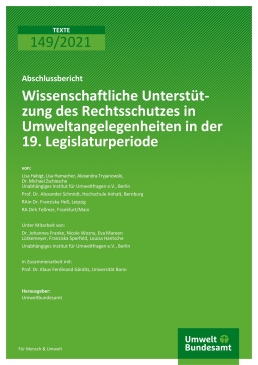
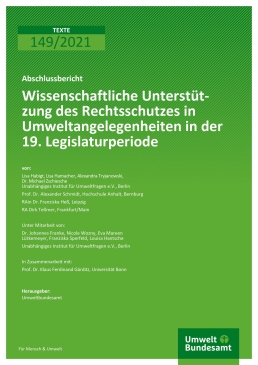
In a research project lasting almost three years, the Independent Institute for Environmental Issues, together with Anhalt University of Applied Sciences, was commissioned by the Federal Ministry for the Environment, Nature Conservation and Nuclear Safety (BMU) and the Federal Environment Agency (UBA) to comprehensively monitor the legal action taken by recognized environmental associations in the Federal Republic of Germany since the amendment to the Environmental Appeals Act in 2017 and to examine and evaluate it on the basis of empirical data.
The TAZ reported on the results of this study in its article on December 21, 2021:
“Nature cannot defend itself”
by Christian Rath!
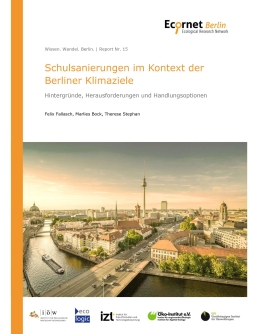
School refurbishments in the context of Berlin's climate targets
December 20, 2021
The Department of Energy Efficiency and Energy Transition publishes in the 15th Ecornet Berlin Report of Wissen. Wandel. Berlin its work on school refurbishments. In the publication entitled
School refurbishments in the context of Berlin’s climate targets
reports on the research project “Heat transition in public non-residential buildings”. The report provides an overview of the connection between school refurbishments and the climate protection targets for public buildings in Berlin. The main focus is on the Berlin School Building Offensive (BSO), which coordinates the planning and implementation of school refurbishments. The report shows the extent to which there are opportunities and requirements for a stronger link between the two topics of school refurbishment and climate protection.

UfU association workshop on collective action
December 01, 2021
Associations workshop
Association actions in environmental and climate protection
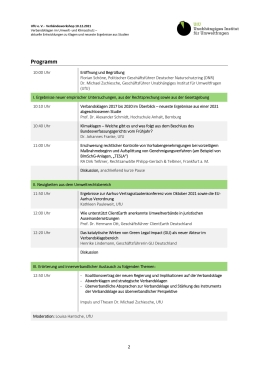
Current developments regarding lawsuits and the latest results from studies
Datum: 10. Dezember 2021
Uhrzeit: 10:00 Uhr – 13:45 Uhr
Ort: Digital
Ansprechpartnerin: Franziska Sperfeld
In a research project lasting almost three years, the Independent Institute for Environmental Issues, together with Anhalt University of Applied Sciences, was commissioned by the Federal Ministry for the Environment, Nature Conservation and Nuclear Safety (BMU) and the Federal Environment Agency (UBA) to comprehensively monitor the legal action taken by recognized environmental associations in the Federal Republic of Germany since the amendment to the Environmental Appeals Act in 2017 and to examine and evaluate it on the basis of empirical data. Several specialist events have already taken place in this context.
The event offers a comprehensive overview of the results of the study as well as of current developments and problems in the field of environmental law, especially with regard to environmental association lawsuits. In the discussion rounds, you will have the opportunity to exchange views on the topics, theses and keynote speeches and share your personal experiences.
The programme is aimed exclusively and exclusively at representatives of recognized environmental and nature conservation associations.


UfU lecture at Bucerius Law School on the topic of law and biodiversity
November 24, 2021
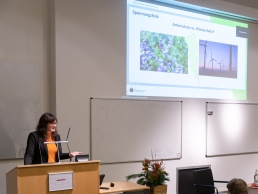
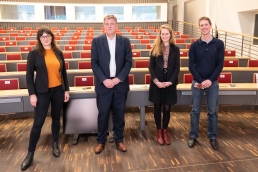
UfU lecture at Bucerius Law School lecture series on law and biodiversity
Climate change affects us all, and effective climate protection requires comprehensive and interdisciplinary exchange. Ultimately, political reality is always reflected in legislation, which makes it all the more important to keep an open mind to other disciplines and vice versa.
In the public lecture series “Future Climate Change: Challenges of a Predictable Crisis” organized by the Studium Generale of the renowned Bucerius Law School – University of Law in Hamburg, environmental, economic, and social aspects were therefore examined and supplemented by legal expert contributions.
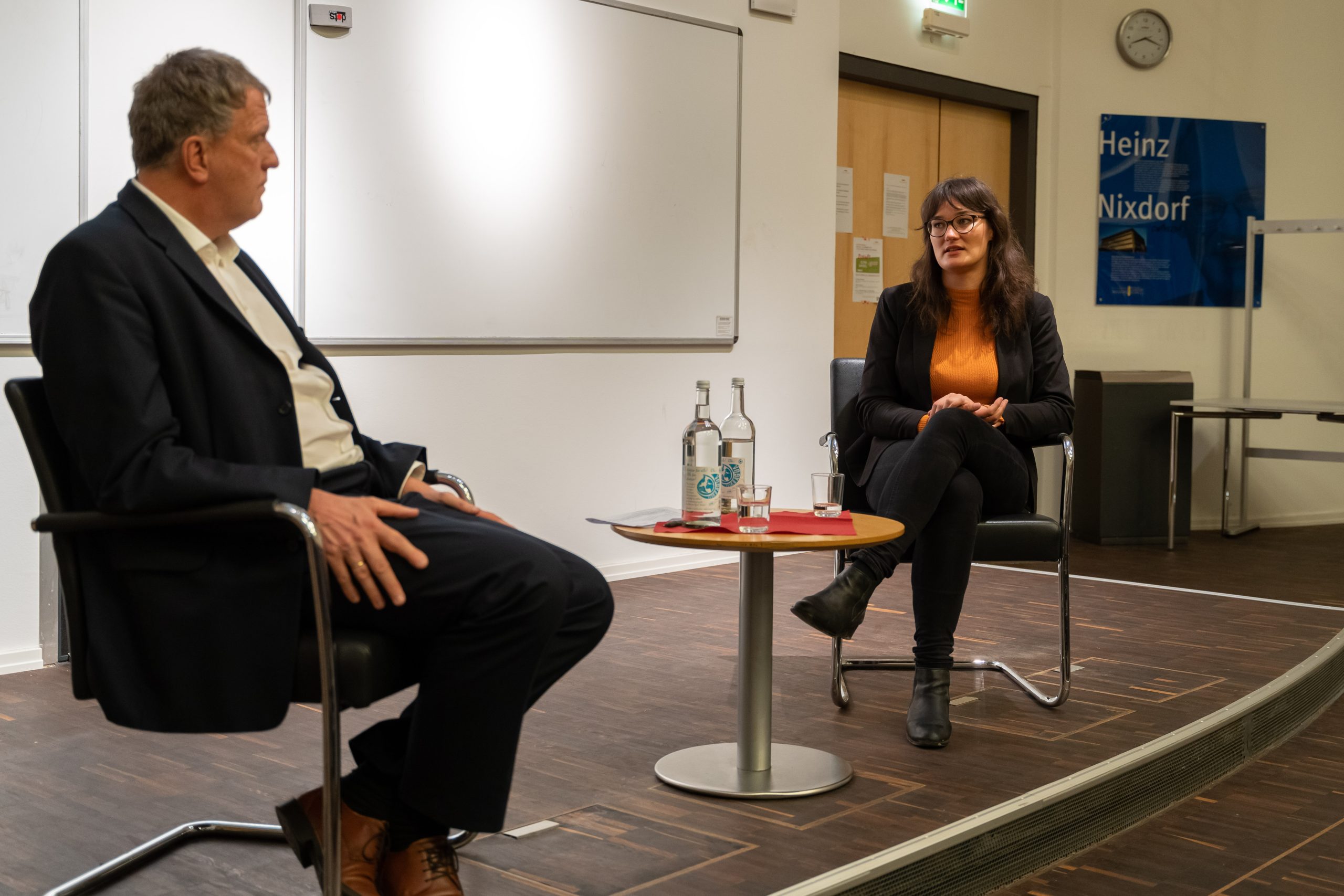
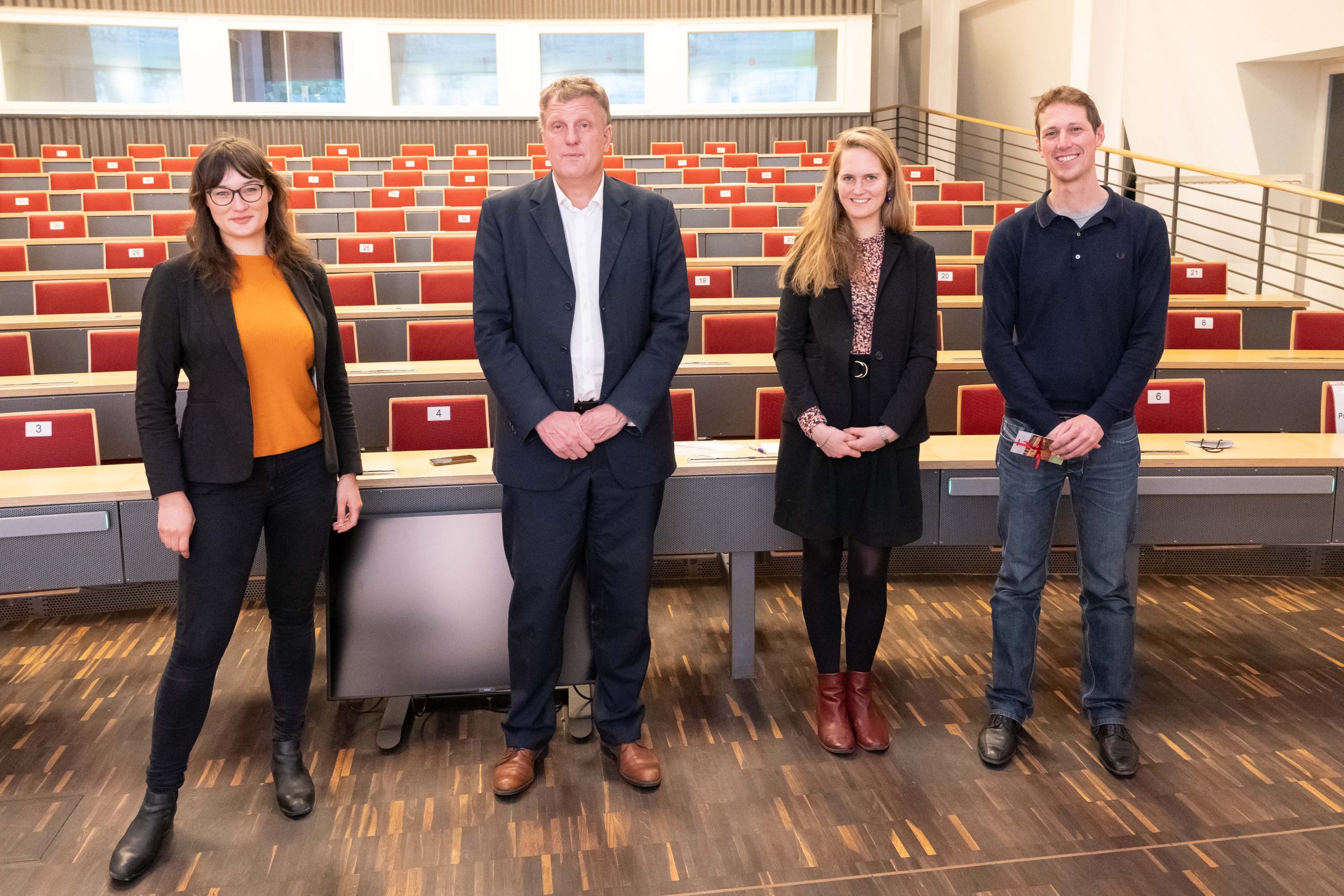
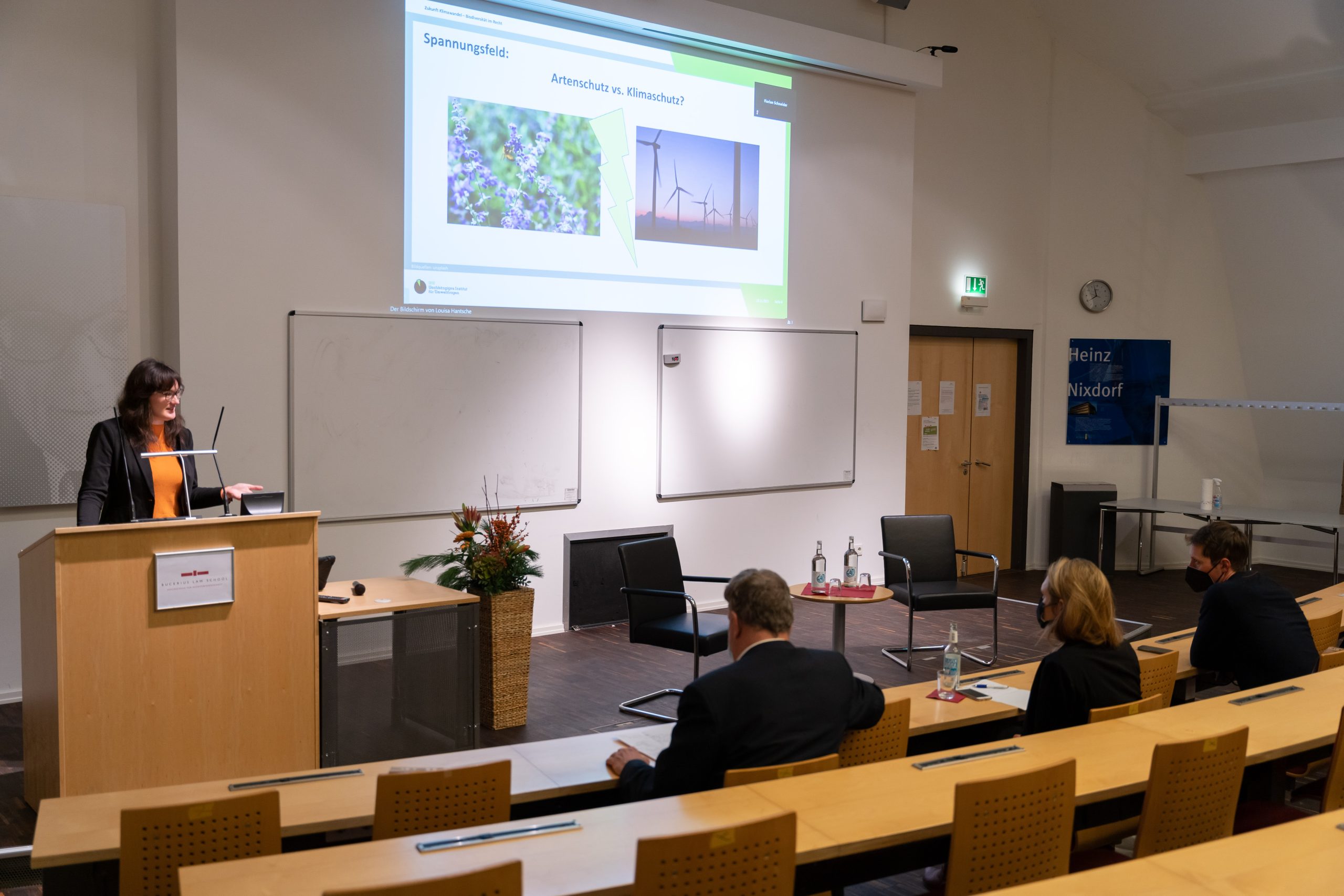
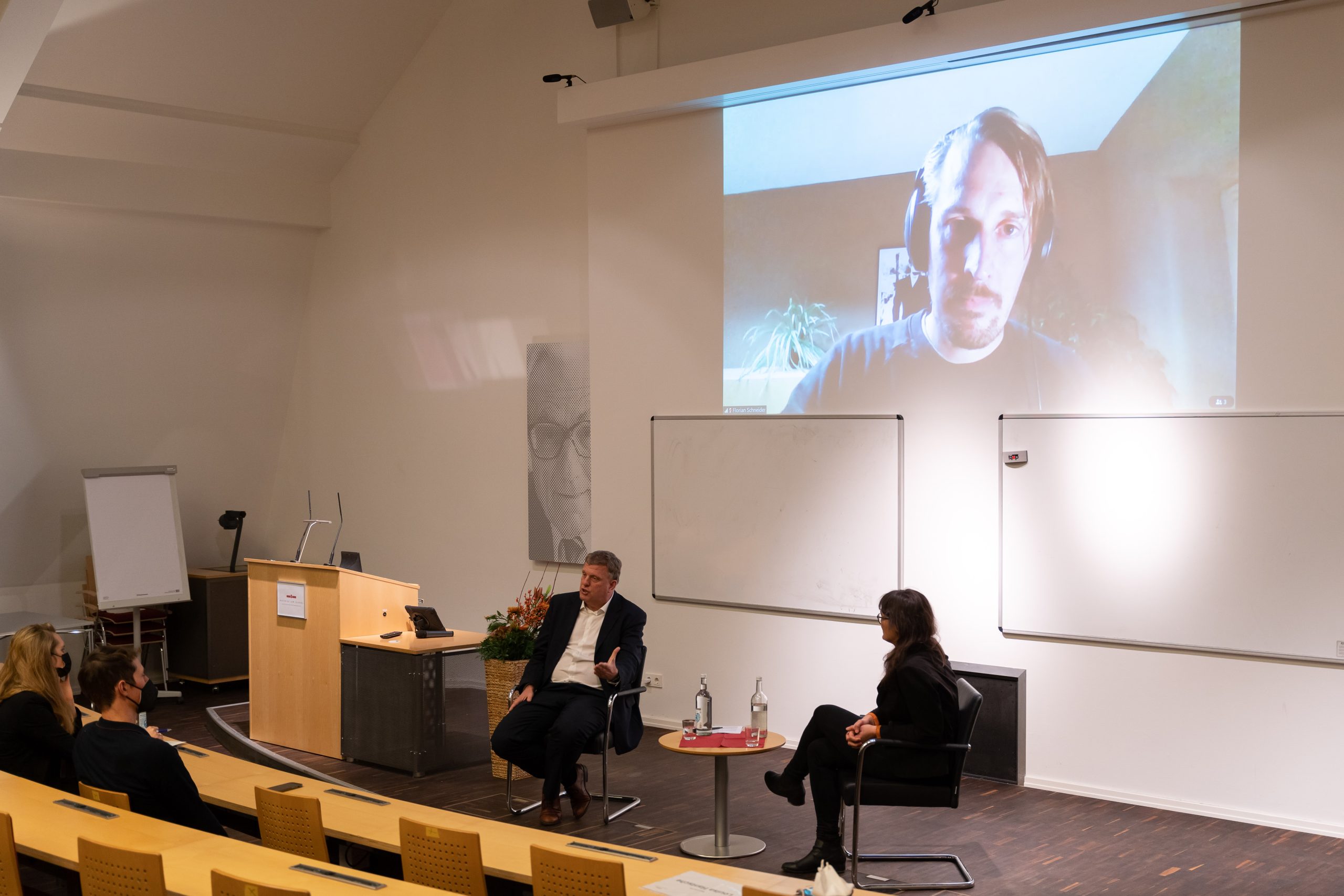
In addition to Dr. Florian Dirk Schneider from the Institute for Social-Ecological Research, UfU environmental lawyer Louisa Hantsche spoke on November 23, 2021, on the topic of biodiversity and the associated legal challenges.
Environmental activists see a major tension between species protection and climate protection in particular, which must be resolved politically and ultimately also legally.
UfU is dedicated to this and other environmental law issues in numerous projects, always pursuing an interdisciplinary and citizen-oriented approach.
The event was moderated by Prof. Dr. Michael Fehling LL.M. Berkeley, Chair of Public Law III – Public Law with Comparative Law at Bucerius Law School.

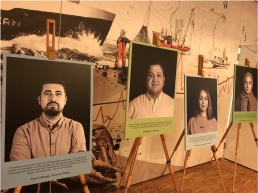
KlimaGesichter: Intercultural environmental education - A project comes to an end
November 18, 2021
Bremerhaven, November 11, 2021 – Final conference of the KlimaGesichter project:
In order to sensitize society to the consequences of climate change, the issue of climate justice and climate-induced migration, UfU, together with the German Climate Foundation and the Felsberg Youth Workshop, trained people with experience of flight and migration as well as interested climate activists to become climate ambassadors in the KlimaGesichter project. The aim was for the climate ambassadors to conduct their own climate workshops and share the knowledge they have gained in combination with their personal stories in order to literally give climate change a face.
At the end of the KlimaGesichter project, the symposiumWhypeople flee from the climate?! took place on November 11, 2021 at the Klimahaus Bremerhaven 8° Ost on the topic of climate-induced migration and flight. It was an event of encounters and exchange, brainstorming and networking. The conference was kicked off the evening before with a deep-sea dinner, impressively and emotionally accompanied by the musical, intercultural association Trimum e.V., which framed and helped shape the entire event. The symposium itself was opened on 11.11.2021 with a powerful and impressive keynote speech by Peter Emorinken Donatus, who shook us awake, got us out of our feel-good bubble and showed us our own responsibility. There were also musical interludes by Trimum e.V., including in collaboration with the KlimaGesichtern, who shared their own stories and perspectives with the participants in a musical version. As the UN Climate Change Conference was taking place in Glasgow at the same time, Sven Harmeling from CARE was called in from COP26 to gain an initial insight into the talks on the ground and discuss climate justice issues together. The afternoon consisted of a workshop phase in Talanoa format, divided into three workshops: Where are we, where do we want to go and how do we get there? Mechthild Becker from the Potsdam Institute for Climate Impact Research (PIK) offered a workshop on the topic: What are “climate refugees”? In his workshop, Merlin Pratsch from the Environmental Justice Foundation dealt with the political and legal framework for climate refugees. In the third workshop, Volker von Witzleben from Ben&Jerry’s and ClimateFace Dr. Tsiry Rakotoarisoa jointly addressed possible visions of a climate-friendly world. The various results, approaches and perspectives were then compiled, discussed and recommendations for action derived from them. Finally, Dr. Dino Laufer, one of the developers of the project, gave an impressive summary of the last three years and reaffirmed the current and ongoing relevance and topicality of the issue of climate change and climate flight. Together with the 70 participants, a great deal was learned, reflected upon and discussed at the event. It was a day of exchange, emotions and a joint departure. From this day and the entire project, we take away the realization that we are only at the beginning and that a lot still needs to happen so that people no longer have to flee because of climate change, that we in Germany have a responsibility towards our fellow human beings around the world and that politicians and our government must fight the cause of climate change instead of the flight itself. The 45 ClimateFaces and the UfU would like to continue to raise awareness of climate change and advocate for the fates of people who are already affected by the effects of climate change.
UfU Paper 01/2021 on participation processes for climate policy-making
12. November 2021
UfU Paper 01/2021 on participation processes for climate policy-making
UfU Paper highlights strengths and weaknesses of processes for civil society participation in climate policy-making in nine countries
As part of the ZIVIKLI project, UfU published the study Civic space for participation in climate policies in Colombia, Georgia and Ukraine in late 2020. This study also included a chapter on “good practice” examples for participatory processes to involve civil society in climate policy-making at the national level.
After the publication of the study, questions were raised in related discussions and events with representatives of climate-driven civil society asking about identified shortcomings in the evaluated participation processes. These results of the ZIVIKLI research have not yet been published due to the focus on good practice aspects in the above-mentioned chapter.
With UfU Paper 1/2021 Building civic space for people-centered climate action? Opportunities and limitations of civil society participation in climate policy-making in nine countries, the authors broadened the analysis’ scope and present the results of their extensive research. Thus, the UfU Paper 1/2021 highlights both, the strengths and weaknesses of each of the participation processes examined, and provides initial suggestions for improving the weaker aspects.
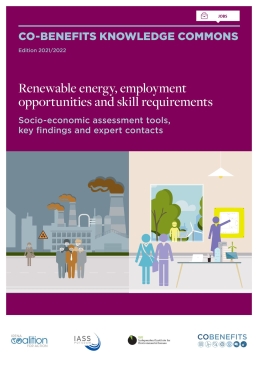
Renewable energy technologies are job boosters
09. November 2021
Renewable energy technologies are job boosters
An ambitious expansion of renewables provides great potential for the creation of new jobs, shows part 1 of the Co-Benefits Knowledge Commons Factsheets Series 2021/2022
Part 1 of the 2021/2022 edition of the Co-benefits Knowledge Commons gives an insight into the state of the art of current research on renewable energies in the power sector and related developments of the job market. The publication shows: Renewables can create sustainable jobs and improve the gender balance in the future energy sector of many countries.
To harness the full potential of these co-benefits, an ambitious expansion of renewable energies is crucial, but should be accompanied by supporting policies in related sectors such R&D and education to build the skills base needed for the energy transition.
The Co-benefits Knowledge Commons Factsheet Edition Employment opportunities and skill requirements aims to connect policy makers in local and national government agencies with expert organisations and contact persons, to quantify employment potentials, assess policy options and unlock co-benefits for people and communities. Editors and authors of the factsheets also want to give decision-makers reliable data about the interconnection of climate-friendly power planning and sustainable job creation at hand.
The factsheet series is published by the COBENEFITS project in partnership with the Sustainable Energy Jobs Working Group under IRENA’s Coalition for Action. UfU, together with the IASS has curated the series. The publication can be addressed through the COBENEFITS project page.
Seventh Conference of the Parties to the Aarhus Convention (MoP 7)
November 03, 2021
UN-Verhandlungen zur Förderung der Umweltdemokratie
Am 30. Oktober 2021 wird die Aarhus-Konvention – die Konvention über den Zugang zu Informationen, die Öffentlichkeitsbeteiligung an Entscheidungsverfahren und den Zugang zu Gerichten in Umweltangelegenheiten – zwanzig Jahre alt. Wenige Tage zuvor kamen die Vertragsparteien, Unterzeichnerstaaten, internationalen Organisationen, die Zivilgesellschaft und andere Interessengruppen in Genf zusammen, um die Errungenschaften und aktuellen Herausforderungen bei der Förderung von Umweltdemokratie, digitaler Transformation und nachhaltiger Entwicklung zu diskutieren. Die Diskussionen zur Aarhus-Konvention und ihr PRTR-Protokoll – das Kiew-Protokoll über Schadstofffreisetzungs- und –verbringungsregister – konzentrierten sich darauf, wie nachhaltige Infrastrukturen und Raumplanung gefördert werden.
Das Ziel der Aarhus-Konvention und seines Protokolls ist der Schutz des Rechts jeder Person gegenwärtiger und künftiger Generationen auf ein Leben in einer seiner Gesundheit und seinem Wohlbefinden zuträglichen Umwelt zu leben. Dieses Ziel erweist sich heute angesichts der zahlreichen ökologischen Krisen als noch wichtiger denn je. Trotz beachtlicher Erfolge stehen viele Länder noch vor großen Herausforderungen im Umwelt- und Menschenrechtsschutz. Zahlreiche Regierungen ergriffen angesichts der Coronavirus-Pandemie (COVID-19) Maßnahmen, die die bürgerlichen Freiheiten im Umweltbereich einschränken. Viele Regierungen riefen nationale Notstände aus und verabschiedeten zahlreiche Maßnahmen, die zwar vordergründig die Ausbreitung des Virus einschränken sollten. Häufig gingen damit jedoch auch erhebliche Einschränkungen der Versammlungs- und Bewegungsfreiheit einher. Die COVID-Maßnahmen beschnitten oder haben das Potential, auch das Recht der Öffentlichkeit auf Zugang zu Informationen, auf Beteiligung an Entscheidungsverfahren und auf Zugang zu Gerichten in Umweltangelegenheiten zu beschneiden. Gleichzeitig leistete die Pandemie der Digitalisierung der Umweltverwaltung und der digitalen Beteiligung der Öffentlichkeit enormen Vorschub.
Vom 18. bis 22. Oktober 2021 fanden im Nationalpalast im Schweizer Genf Verhandlungen zwischen Vertragsparteien der Aarhus-Konvention und des PRTR-Protokoll statt, um die aktuellen Entwicklungen zu beraten:
| Dates | Meetings |
| 18. bis 20. Oktober 2021 | Siebte Vertragsstaatenkonferenz der Aarhus-Vertragsparteien (MoP 7)
Seventh session of the Meeting of the Parties to the Aarhus Convention |
| 21. Oktober 2021 | Gemeinsames hochrangiges Segment der Aarhus- und PRTR-Parteien |
| 22. Oktober 2021 | Vierte Vertragsstaatenkonferenz der PRTR-Vertragsparteien (MoPP 4)
Fourth session of the Meeting of the Parties to the Protocol on PRTRs |
Die Beschlüsse des Aarhus-Konvention Compliance-Ausschusses
Im Rahmen des MoP 7 bestätigten die Aarhus-Vertragsparteien insgesamt 20 Feststellungen und Empfehlungen des Aarhus-Konvention Compliance-Ausschusses (Aarhus-Ausschuss). Auf drei Beschlüsse, die sich auf die Nichteinhaltung der Aarhus-Konvention durch Deutschland (1.) und die Europäische Union (2.) beziehen, sind hervorzuheben. Auch auf einen Beschluss zu Weißrussland (3.) ist einzugehen.
1. Zugang zu Gericht für Umweltverbände in Deutschland
Die Vertragsparteien nahmen die Feststellungen und Empfehlungen des Aarhus-Ausschusses gegen Deutschland an (ACCC/C/2016/137). Das Komitee stellte fest, dass Deutschland gegen das internationale Aarhus-Recht verstößt. Das Anerkennungskriterium der basisdemokratischen Verfasstheit für Umweltvereinigungen ist zu streng. Das Kriterium verwehrt in unzulässiger Weise, dass Umweltverbände Umweltentscheidungen vor deutschen Gerichten prüfen lassen können.
Aus diesem Grund verpflichten die Aarhus-Parteien Deutschland nun, deutsches Recht zu ändern. Ganz konkret ist § 3 Absatz 1 Satz 2 Nummer 5 des Umwelt-Rechtsbehelfsgesetzes zu streichen. Durch die Gesetzesänderung werden zukünftig Umweltstiftungen wie WWF Deutschland oder Vereine wie Greenpeace Deutschland klagen können.
UfU wird diesen Anpassungsprozess mit seiner Expertise in den kommenden Monaten begleiten.
2. Zugang zu Gericht in der Europäischen Union
Die Europäische Union ist selbstständige Vertragspartei der Aarhus-Konvention. Auch sie muss Aarhus-Recht einhalten. In gleich zwei öffentlichen Rügeverfahren stellte der Aarhus-Ausschuss fest, dass der europäischen Öffentlichkeit und Umwelt-NGOs kein ausreichender Zugang zu europäischen Gerichten gewährleistet wird.
Die Aarhus-Vertragsparteien nahmen die Feststellungen und Empfehlungen des Aarhus-Ausschusses zum Fall ACCC/C/2008/32 an, nachdem die Europäische Union diese Annahme (engl. „endorsement“) bei der letzten Vertragsstaatenkonferenz in Budva (Montenegro) auf dem MoP 6 im Jahr 2017 blockierte. Die NGOs hofften, dass mit dieser Annahme auch gleichzeitig die Feststellungen und Empfehlungen zum Fall (ACCC/C/2015/128) angenommen werden. Aufgrund der erneuten Blockadehaltung durch die Europäische Union, wurden die Feststellungen und Empfehlungen des Aarhus-Ausschusses diesbezüglich nicht verabschiedet. Die Bestätigung der Feststellungen und Empfehlungen des Aarhus-Komitees wurde erneut auf die nächste Vertragsstaatenkonferenz in rund vier Jahren verschoben. Die NGO-Delegation konnte zumindest darauf hinwirken, dass die Vertragsparteien festhalten, dass diese erneute Sonderbehandlung bzw. Ausnahmeentscheidung für die Europäische Union in keiner Weise eine Praxis im Rahmen des Aarhus-Übereinkommens begründet.
Das UfU wird auch in den kommenden Jahren dafür kämpfen, dass Bürger*innen und Umwelt-NGOs Umweltentscheidungen, wie zum Beispiel europäische Beihilfeentscheidungen, auf EU-Ebene überprüfen lassen können. Eine erneute Änderung der gerade erst novellierten Aarhus-Verordnung ist dafür unumgänglich.
Mehr Informationen zur Aarhus-Konvention und ihrer Umsetzung in der Europäischen Union und Deutschland siehe: http://www.aarhus-konvention.de/
3. Schutz von Umweltschützer*innen und NGOs in Weißrussland
Die Verhandlungen wurden von den akuten Menschenrechtsverletzungen in Weißrussland überschattet, die gegenüber Umweltschützer*innen verübt wurden. Zum ersten Mal in der zwanzigjährigen Vertragsgeschichte wurde eine beschwerdeführende NGO, die belarussische NGO „Ecohome“, während eines laufenden öffentlichen Beschwerdeverfahrens aufgelöst. Die Staatengemeinschaft reagierte auf die Verletzungen fundamentaler Rechte von Umweltschützer*innen damit, dass Weißrussland ab dem 1. Februar 2022 seine besonderen Rechte und Privilegien unter der Konvention entzogen werden, sollte Weißrussland „Ecohome“ nicht wieder als öffentlichen Verein anerkennen.
Das UfU verurteilt die Bestrafung, Verfolgung oder Belästigung von Umweltschützer*innen auf das Schärfste! Das UfU unterstützt alle weißrussischen Umwelt-NGOs und Umweltschützer*innen im Rahmen seiner Möglichkeiten.
Weitere Ergebnisse:
UN-Sonderberichterstatter*in für Umweltschützer*innen
Aufgrund der sich verschlechternden Menschenrechtslage in Weißrussland und anderen Vertragsstaaten, wo Umweltschützer*innen zunehmend bestraft, verfolgt oder belästigt werden, installierten die Aarhus-Parteien einen sog. English „Rapid Response Mechanism“. Im Zuge dessen wird im Jahr 2022 ein*e UN-Sonderberichterstatter*in für Umweltschützer*innen berufen, um international Menschenrechtsverletzungen sichtbar zu machen.
Zwei neue Mitglieder im Aarhus-Ausschuss
Die Aarhus-Parteien folgten nicht nur zahlreichen Feststellungen und Empfehlungen des Aarhus-Ausschusses, sondern sie wählten ebenfalls zwei neue Mitglieder in das quasi-gerichtliche UN-Gremium. Die ehemalige Richterin des Europäischen Gerichtshofs Eleanor Sharpsten und unser langjährige und geschätzte UfU-Kollegen Thomas Schomerus. Mehr Informationen rund um seine NGO-Nominierung sind hier zu finden: https://www.ufu.de/en/nomination-of-prof-dr-thomas-schomerus-to-serve-the-aarhus-committee-of-the-united-nations-by-a-strong-alliance-of-european-environmental-ngos/
Guinea-Bissau erster afrikanischer Vertragsstaat der Aarhus-Konvention
Ein historisch bedeutsames Ereignis auf dem MoP 7 war der Beitritt des westafrikanischen Landes Guinea-Bissau zur Aarhus-Konvention. Damit hat die Vertragsstaatenkonferenz den ersten Staat außerhalb der UNECE-Region in den Kreis der Aarhus-Staaten aufgenommen. Die gemeinsame Hoffnung ist, dass dieser vorbildhafte Schritt weitere Staaten Asiens oder Afrikas animiert, wie beispielsweise die Mongolei oder Usbekistan, der Konvention zur Umweltdemokratie beizutreten.
GVO-Novelle fehlt nur noch ein Vertragsstaat zum Inkrafttreten
Albanien hat als 32. Staat die GVO-Novelle ratifiziert. Diese sieht die öffentliche Beteiligung an geplanten Freisetzungen gentechnisch veränderter Organismen (GVOs) vor. Damit fehlt nur noch die Ratifizierung der GVO-Novelle von einer der folgenden Staaten, damit die Vertragsänderung der Aarhus-Konvention völkerrechtlich in Kraft tritt: Armenien, Aserbaidschan, Weißrussland, Kasachstan, Kirgisistan, Nordmazedonien, Tadschikistan, Turkmenistan und Ukraine.
Goodbye Jeremy Wates als Aarhus-NGO-Beobachter!
Den intergouvernementalen Verhandlungen, die erstmals im hybriden Format stattfanden, wohnten zahlreiche nichtstaatliche Beobachterorganisationen aus dem NGO-Sektor und der Wissenschaft bei. Zukünftig wird unsere Kollegin Summer Kern vom österreichischen Ökobüro eine besondere Rolle im zwischenstaatlichen Prozess einnehmen. Sie löst Jeremy Wates, Generalsekretär des European Environmental Bureau (EEB), als offizielle NGO-Beobachterin ab. Wir sagen Danke Jeremy für deinen langjährigen bedeutenden Beitrag zur Förderung der Umweltdemokratie!
Wo und wann genau die nächste Aarhus- und PRTR-Vertragsstaatenkonferenz (MoP 8 und MoPP 5) in rund vier Jahren stattfinden wird, ist noch unklar. Klar ist aber, dass das UfU auch dort wieder als unabhängiger NGO-Beobachter dabei sein wird!
Mehr Informationen rund um den MoP 7 und MoPP 4 sind hier zu finden: https://unece.org/climate-change/press/governments-and-stakeholders-strengthen-commitment-environmental-democracy
Weitere Fragen rund um die Vertragsstaatenkonferenzen beantwortet: Larissa Donges
Pressekontakt: Jonas Rüffer
Small-scale local climate projects in Central Vietnam enter third round

November 01, 2021
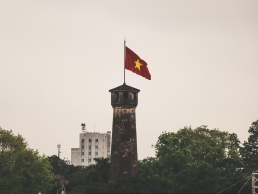
As in previous projects in 2019 and 2020, UfU is once again supporting small-scale local projects in Central Vietnam to raise awareness among various population groups about local climate change issues and more climate-friendly options for action, as well as to build the capacity of young people for more climate protection measures. With funding from the German Federal Foreign Office’s climate fund and in cooperation with the Mientrung Institute for Scientific Research (MISR), UfU enables talented young Vietnamese to develop their own project ideas and implement them locally. At the beginning of the year, young people from Central Vietnam were able to submit their own project ideas to the UfU and MISR ideas competition. Of all the applications, the four best project ideas were selected for funding and subsequent implementation. The following small projects were selected this year:
- Raising awareness of climate change through a school garden. A demonstration project at Hoa Phuoc Primary School, Hoa Vang District, Da Nang City. Project development and implementation by students Kieu Thi Phuong, Phan Minh Luu An, Van Thi Thao Vy, Bui Van Quoc Trung and Tran Quang Huy.
- Raising public awareness of the carbon storage capacity of seagrass beds to mitigate climate change and minimize activities that lead to the degradation of the seagrass ecosystem in Lang Co lagoon, Thua Thien Hue province. Project development and implementation by students Nguyen Huu Chi Tu and Nguyen Tu Uyen.
- Foundation of a club for the prevention of and adaptation to climate change in An Dong district in the city of Hue. Project development and implementation by the young teachers Le Thi Thanh Nhan and Tran Thi Ngoc Cam from Hue Medical College.
- Increasing the stock of indigenous tree species and a production forest in Cam Nghia village, Cam Lo district, Quang Tri province. Project development and implementation by Nguyen Van Ky Truong, Nguyen Xuan Tam and To Minh Hanh.
The overall project and the start of the four small projects were officially launched with a kick-off workshop on September 26. In addition to the project teams, the 25 participants included the mentors of some of the teams, some project winners from previous years and other interested young people. In a friendly and productive atmosphere, UfU gave an introduction to project management, while the challenges and plans of all projects were then discussed and suggestions for solutions and improvements were discussed together. The small projects will now be implemented and monitored with the support of UfU and MISR until the end of February 2022.

Citizens' Assembly "Germany's role in the world" - For more climate protection!

October 21, 2021
Citizens’ Assembly “Germany’s role in the world” – We must take responsibility for climate protection!
The Citizens “Assembly – a committee put together by lot and according to certain criteria, which is intended to represent a cross-section of the population and discuss topics relevant to the future, according to the idea. For the second nationwide Citizens” Assembly in Germany, 169 participants from various federal states were selected by lot according to the criteria of place of residence, size of residence, age, gender, level of education and migration background to discuss corona, world trade, peacekeeping, development aid, migration or environmental protection. The Citizens “Assembly is organized by Mehr Demokratie e.V. and LOS. A Citizens” Assembly always brings together politics, civil society and science. Scientific institutes and other institutions provide the participants with important information on the topics and represent the opinion of the scientific community. The participants can incorporate this information into the discussion and are thus able to debate the issues in a well-founded manner. UfU was invited as an expert for this Citizens “Assembly and summarized the environmental and climate issues.
Aim of the Citizens” Assembly
The Citizens “Assembly is a relatively new instrument in Germany. If suitable, it should serve as a further participation format in Germany and provide parliament with important impetus for the direction of the future. Particularly when it comes to forward-looking issues such as climate protection or global trade, the Citizens” Assembly can provide an assessment of how the German population feels about these issues and point politicians in important directions.
Climate protection
In this Citizens “Assembly, UfU has summarized the environmental and climate issues, an important sub-topic of ‘Germany’s role in the world’. It was found that the topic of climate protection plays an important role for the majority of participants and that tackling the tasks associated with climate protection is seen as relevant for the future. The participants formulated recommendations on water protection, biodiversity conservation and sustainable management. It became clear that the economy and consumption in Germany should also be measured against the principle of sustainability. The Council recommends the protection of biodiversity and a sustainable circular economy. UfU has summarized the exact results: Environmental policy recommendations of the Citizens” Assembly “Germany’s role in the world” (PDF) (German only)
Germany’s responsibility
The participants of the Citizens “Assembly make it unmistakably clear that they ascribe a role model function to Germany in matters of climate protection. Politicians must be aware of their responsibility and do everything they can to ensure that Germany can be seen as an example of good climate protection. Particularly with regard to countries of the Global South and other ‘disadvantaged’ states, Germany is obliged to enter into cooperation and promote sustainable developments.
Relevance of the results
The results of the Citizens” Assembly in the field of environmental and climate protection have been forwarded to the Federal Ministry for the Environment, Nature Conservation and Nuclear Safety.
However, the participatory role of the citizens’ councils is still limited. Although the results are forwarded to the Bundestag and the relevant ministries, they are not binding on them. According to UfU, this should change in the future so that the Citizens’ Assembly does not become an alibi instrument. How exactly the Citizens’ Councils are involved in the process and to what extent the results can have legal relevance is open to debate. But genuine participation is only possible if the results of this participation also bind the political decision-makers in some way.
In future, UfU will campaign for more citizens’ councils in Germany.
Environmental policy recommendations of the Citizens’ Assembly “Germany’s role in the world” (PDF) (German only)