


Energy Efficiency Program (EEP) - Climate protection at Potsdam schools
October 18, 2021
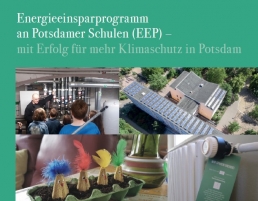
Energy saving program at Potsdam schools (EEP) – with success for more climate protection in Potsdam – new brochure published!
The city of Potsdam recognized early on that there is enormous potential for savings, especially in schools. This is why the Energy Efficiency Program at Potsdam Schools (EEP) has been in place since 1998. Each year, the program provides EUR 60,000 in bonuses for energy-saving measures in schools. Schools can apply to take part in this program and receive monetary support for specific energy-saving projects as well as educational materials.
How does it all work?
Schools that actively participate benefit from the project’s wide range of offers: workshops, tours and the respective, supervised EEP annual project with different thematic focuses impart skills and encourage energy saving and climate protection. The schools collect points in a bonus system for the measures they implement. Since 2017, UfU has been implementing the measures together with the Berlin Energy Agency (BEA), which is realized by the Municipal Real Estate Service (KIS) on behalf of the Department of Education, Youth and Sport of the state capital Potsdam. The aim of the EEP project is to maintain the level of energy consumption achieved to date at Potsdam’s schools and to reduce it in future. In recent years, 38 Potsdam schools have been actively involved in the project. For example, pupils have developed concepts on how to reduce the amount of waste produced at their own school, and pupils have been responsible for radiators, windows/doors, lighting and waste garbage cans for a long time, actively contributing to energy savings. Climate protection works best when great ideas and successful actions become permanent routines. The EEP schools in Potsdam show how this works with many good examples. You can now read more about the program and its successes in the official project brochure and on the website set up especially for the EEP: www.energieeinsparprojekt-potsdam.de You can find the full program brochure here: EEP-Potsdam_Program brochure (PDF) (German only)
Three4Climate inspires emission-free travel through Europe
October 2, 2021
A team of teachers from Bielefeld (Germany) accepts the challenge and travels emission-free to Loulé (Portugal) to take part in a teacher exchange of the EU climate project “Three4Climate” in the Algarve.
How can you cover a distance of almost 3,000 kilometers without local emissions? Tobias Dewald and Jens Ohlemeyer, the participating teachers from Friedrich-von-Bodelschwingh-Gymnasium in Bielefeld/Bethel, had an idea of the challenge the answer to this question would pose. The two teachers from Bielefeld took the goal of the Three4Climate project of the three successive EU Council presidencies of Germany, Portugal and Slovenia to achieve climate neutrality by 2050 very seriously. The teachers from Bielefeld were convinced that a holistic and innovative approach was needed for this journey. So they developed the ambitious plan to undertake the long-distance journey using three different types of locally emission-free means of transportation: Electric car, train and electric bicycles. The first 2,300 kilometers from Bielefeld/Germany to the project partner school in Braga/Portugal were to be covered in an electric car (Mercedes-Benz EQV) with enough space for the two teachers and their school e-bikes. The journey was to continue from Braga via Lisbon to Beja (another 500 kilometers) by train. From Beja to Loulé, two of the Friedrich-von-Bodelschwingh-Gymnasium’s electric bikes were to serve as means of transport for the last 150 kilometers.
On Friday, October 1st at 4:00 a.m., Tobias Dewald and Jens Ohlemeyer started their electric road trip in Bielefeld. They had to stick to a very strict plan to reach the available HPCs (hyper-charging stations) along the way in order to be in Braga on time on Sunday. Fortunately, all the HPCs in Germany, Belgium and France were working perfectly and the battery could be charged from 10 % to 100 % in 45 to 60 minutes. In Brussels, Tobias Dewald and Jens Ohlemeyer met with Katerina Fortun from the European Commission to hand over the urgent demands of the Three4Climate students for more climate protection measures in the European Union. On Sunday morning, October 3, the two teachers were welcomed by the partner school in Braga and took their e-bikes and the train to Porto and Lisbon. On the comfortable train, they were also able to recharge their personal batteries after two days of traveling without much sleep. On the last day of the trip, Monday, October 4, the team of teachers took the train from Lisbon to Beja and cycled 50 kilometers to Aljustrel/Messejana. There they visited a large 13.9 MWp solar power plant (electricity for around 8,000 households) to show and communicate where the energy of the trip should come from and that our future is electric and emission-free. From there, it was another 100 kilometers by e-bike to Loulé on the Algarve coast. Due to the very hilly terrain of the Algarve and the amount of luggage, the last part of the journey was very strenuous despite the electric support of the bikes. In addition, 23 kilometers before the finish in Loulé, the first battery of the e-bikes was empty and then both batteries 10 kilometers before Loulé. Hungry and exhausted, but determined to reach their destination by bike on the planned route, the two teachers pushed their bikes with heavy luggage the last 10 kilometers up the hilly Algarve and arrived in Loulé at around 11 p.m., shortly before midnight. Tobias Dewald and Jens Ohlemeyer were overjoyed with their successful zero-emission journey when they were welcomed by their partner school in Loulé on Wednesday, October 6, and worked together with the teachers from Braga on projects to achieve climate neutrality in the EU by 2050. Vitor Aleixo, the mayor of Loulé/Salir, invited the mayor of Bielefeld, Pit Clausen, to Portugal to continue the exchange with young people from both countries and cities. The project schools of Braga, Loulé and Bielefeld will continue their school cooperation beyond the Three4Climate project with official school partnerships for future projects. From the perspective of the EU climate protection project, the exchange was a great success. Many inspiring ideas for effective climate protection measures emerged with the call for increased education for sustainable development in schools. In addition to the climate protection goals and measures, the Three4Climate project also strengthened relations between the three participating countries Portugal, Slovenia and Germany, as new friendships were forged across Europe.
News from the Three4Climate project
October 01, 2021
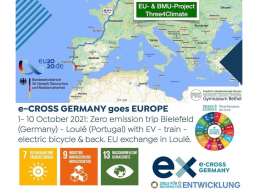
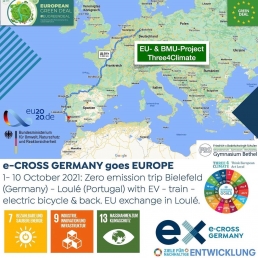
The “e-cross Germany goes Europe” trip from Bielefeld to Loulé started on October 1, 2021! The two Three4Climate teachers from Bielefeld, Jens Ohlemeyer and Tobias Dewald, are on their way to a teacher exchange in Portugal. Under this link you can follow them on the various stages of their journey and find news from the road.
https://ecross-germany.de/three4climate-e-cross-germany-goes-europe/
The first stopover is in Brussels at DG Clima. While the car is charging, you can follow the livestream of how the demands of the students from Portugal, Slovenia and Germany participating in the Three4Climate project will be handed over to the European Commission’s Directorate-General for Climate Action on October 1 in Brussels.
Hanover schools allowed to build CO2 traffic lights again
September 30, 2021
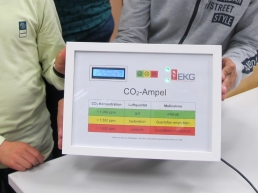
On 29.09.2021, the first of a total of three CO2 traffic light construction workshops in the 2021-22 school year took place in the Energy LAB of the Leonore Goldschmidt School. This time, UfU, in the person of Ms. Dorina Schacknat (engineer and school supervisor at UfU), is leading the self-construction workshops on behalf of the Hannover School Biology Center. The pupils from three secondary schools and one vocational school first learned more about the properties and effects ofCO2 in exciting experiments conducted by Dr. Virdis (coordinating teacher at the Energy LAB). In addition to its contribution to climate change, the influence ofCO2 on the indoor climate was illustrated. Energy-saving cross-ventilation was then a topic.
The students then assembled their materials in teams of two and programmed their ownCO2 traffic light in the loT workshop with the help of a graphical user interface. They had the display showCO2 and temperature and had the LEDs light up green (below 1,000 ppm), yellow (1,000-1,500 ppm) and red (above 1,500 ppm) depending on theCO2 content. The students got very creative and tried out other functions such as making the LED flash.
Finally, the CO2 traffic lights were given a housing and the respective school logo was added. The CO2 traffic lights are now ready for use and can help pupils and teachers to create a good indoor climate with as few infections as possible through ventilation.
This time, great traffic lights were created for use in times of coronavirus. The three workshops are supported by the project funding of the federal state of Lower Saxony on the occasion of its 75th anniversary, which brings schools together with exciting extracurricular partners.
The first CO2 traffic light workshop led by UfU took place in June 2021 (still digital at the time):
„Kann man noch Energie sparen, wenn alle lüften, was das Zeug hält?“

A law with gaps - the Berlin Climate Protection and Energy Transition Act

September 21, 2021
A law with loopholes
UfU comments on the Berlin Climate Protection and Energy Transition Act
On August 19, the Berlin House of Representatives passed an amendment to the Berlin Climate Protection and Energy Transition Act. A law that is intended to make Berlin climate-neutral in the long term and accelerate the energy transition. With the amendment, the House of Representatives has once again significantly tightened the law, making it one of the most ambitious climate protection laws in Germany. There is hardly a comparable state law in terms of its radicalism, depth and short-term nature. The climate targets have been drastically increased and the time frame in which the targets are to be achieved has been shortened by up to 5 years in some cases. UfU has dealt intensively with this amendment and commented on it. Basically, it must be said that we very much welcome the ambitious targets of the EWG Bln. The urgency with which we must face up to the energy transition in Berlin is taken into account with this law. However, we have well-founded doubts as to the appropriateness of the tightening if it is already foreseeable that the law’s targets will not be met. The law threatens to degenerate into another piece of paper with objectives that will ultimately not be implemented. Our core criticism is that the law consistently neglects official administrative processes and the time they take. For example, it sets targets of 80% savings in primary energy consumption in public buildings. At the same time, it ignores the fact that seven Berlin districts already have fully developed refurbishment roadmaps for these buildings, with significantly lower savings potential. So either the refurbishment would have to be duplicated, the plans would have to be fundamentally revised or the objective of the law is already untenable. Schools are to be given new efficiency standards without taking into account the fact that the planning procedures and approvals for many schools have already been completed as a result of the current school construction offensive. This is because work on public buildings such as schools is sometimes applied for and approved years in advance. The law can therefore only take effect through double renovations and increased financial expenditure. We have found many other points in the law that we believe simply cannot be implemented with the current staffing levels at all administrative levels. The acute shortage of skilled workers, including in the building authorities, prevents quick and punctual action. These should be the problems that the House of Representatives deals with before it passes further amendments to climate protection laws that cannot be complied with. Link: Click here for our statement: UfU comments on the EWG Bln (German only)
Fifth Aarhus Workshop on human rights and climate laws
13. September 2021
On 7. September 2021, Slovenian and German NGOs co-organised the Fifth Aarhus Workshop.
The NGOs invited governmental officials, legal scholars and experts as well as researchers to discuss the intertwining between human rights, climate laws and the Aarhus Convention in the European Union. The central question was, how civil society (organisations) are involved in environmental and climate policy processes at EU and Member State level.
The Aarhus Convention adopted in 1998 by the European Union and its Member States lays the foundations for the right to be informed, be able to effectively contribute own ideas of a climate-neutral Europe and also have the opportunity to take legal action. Due to this treaty civil society and NGOs have the right to go to court and challenge EU-decisions, when environmental and climate laws are presumed to be violated. Examples for those administrative decisions are approvals of new fossil fuel projects, fishing quotas, approvals of state aid for nuclear power plants and so on. Since the European Union is criticised for not allowing citizens and NGOs to review their decisions, there will be a new regulation implementing the Aarhus Convention. Therefore, it has been carefully discussed at the Workshop, whether the new regulation and other EU laws will finally fully comply with the Aarhus Convention.
For this reason, the Aarhus Workshop played a key role in bringing together a variety of stakeholders and raising awareness on how to improve citizen’s and NGOs (legal) involvement in climate and environmental protection. Around 50 participants from environmental associations, foundations, universities, governmental organisations as well as legal professionals mainly from Slovenia, Germany and Brussels region joint the Aarhus Workshop to tackle the implementation deficits within the European Union and also at Member State level. Moreover, this joint Workshop, taking place merely a few weeks before the seventh session of the Meeting of the Parties of the Aarhus Convention (so-called “MoP 7”; from 18. to 21. October 2021 in Geneva) served as a crucial, decisive occasion, a springboard into a cleaner, greener future, where citizens are actively participating.
Speaker:
- Dr. Vasilka Sancin, Associate Professor at University of Ljubljana & Director of Centre for International and Business Law
- Dr. Roda Verheyen, LL.M., Environmental Lawyer of Rechtsanwälte Günther Partnerschaftsgesellschaft
- Mag. Senka Šifkovič Vrbica, Environmental Lawyer at the Institute for Spatial Policies (IPoP)
- Sebastian Bechtel, LL.M., Environmental Democracy Lawyer at ClientEarth Brussels
- Mag. Tanja Pucelj Vidovič, Focal Point for Aarhus Convention at the Ministry of the Environment and Spatial Planning
- Matthias Sauer, Head of Unit of Federal Ministry for Environment, Nature Conservation and Nuclear Safety
- Alistair McGlone, Director at Alistair McGlone and Associates Ltd & former member of the Aarhus Convention Compliance Committee
- Dr. Maša Kovič Dine, Assistant Professor at University of Ljubljana
- Dr. Maria Alexandra de Sousa Aragão, Professor at the University of Coimbra
- Aljoša Petek, Environmental lawyer at PIC – Legal centre for the protection of human rights and the environment
In our first vivid panel discussion on the upcoming Meeting of the Parties of the Aarhus Convention (MoP-7) the panellists Mag Tanja Pucelj Vidovič; Matthias Sauer and Alistair McGlone discussed whether or not the European Union is granting its EU citizens and NGOs sufficient access to justice. Dr. Michael Zschiesche, Managing Director and Chairman of the UfU board, emphasised that: “The double standard by the European Union needs to stop. EU citizens and NGOs must be able to hold the European Union accountable, when their decisions harm the environment and the climate, as civil society can hold Member States accountable in environmental matters.” Alistair McGlone further strongly underlined, that “The EU should champion accountability and the international rule of law to avoid damaging its reputation as a global leader in environmental forums.”
A second panel discussion covered the interplay between public participation in environmental decision-making and environmental and climate litigation. Dr. Maša Kovič Dine, Dr. Maria Alexandra de Sousa Aragão and Aljoša Petek, – put it this way: “Proper planning and approval procedures with early, inclusive and effective public participation on Member State and EU level can prevent lengthy and expensive legal disputes in courts. Active citizenship prevents long-term financial costs by environmental degradation.”
All panellists agreed, that the current participation formats do not meet the needs of the younger generation, which is heavily engaged in climate protection and sustainable development.
Presentations:
– Human Rights, European & National Climate Laws and the Importance of the Aarhus Convention (PDF)
– Slovenian environmental NGO’s perspective on Slovenian Presidency of the Council of the European Union regarding environmental matters
Press Release:
How the European Union violates international environmental law since two decades
NGOs that organised the workshop:
- UfU – the Independent Institute for Environmental Issues,
- PIC – the legal centre for the protection of human rights and the environment,
- IPoP – The Institute for Spatial Policies
- Umanotera – the Slovenian Foundation for Sustainable Development
- Centre for International and Business Law (CIEL)
About the workshops:
A total of five online Aarhus Workshops were organised by UfU in 2020 and 2021. On 11 May 2020, 30. June 2020, 17 November 2020 and on 24 March 2021 interested participants from Belgium, Germany, Portugal and Slovenia took part in the digital Workshops. A joint position paper “German Portuguese Slovenian Civil Society Declaration on Access to Justice for Citizens & NGOs at European Union Level“ was published. UfU thanks all who contributed to the five Aarhus Workshops. All persons involved made this series of events a success.
All Aarhus Workshops are part of the project “European Implementation of the Aarhus Convention in the Digital Age (EU-AarKo)” of the Independent Institute for Environmental Issues UfU e.V. This project is financially supported by the German Environment Agency (UBA) and the Federal Ministry for the Environment, Nature Conservation and Nuclear Safety within the framework of the sponsorship of environmental associations.
For any questions around the Fifth Aarhus Workshop, please contact Kathleen Pauleweit (UfU) kathleen.pauleweit@ufu.de or Aljoša Petek (PIC) aljosa.petek@pic.si.
More information on environmental democracy on European Union level can be found here (German): http://www.aarhus-konvention.de/
For more information about the EU-AarKo project and its background, click here.
The Birkenwerder energy-saving project can finally continue
September 09, 2021
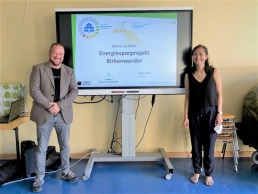
After interruptions due to the pandemic, the municipality’s energy-saving project, which was launched in 2019, can now continue in earnest. In Birkenwerder’s daycare centres and the Pestalozzi elementary school, children will be trained in energy saving in the coming months and technology and usage behaviour will be optimized.
Mayor Stephan Zimniok knows that the employees in the daycare centers and elementary school in Birkenwerder have a variety of tasks and therefore have enough to do, but the municipality still sees climate protection as an important goal – after all, it has declared a climate emergency. For this reason, the municipality of Birkenwerder has commissioned the Independent Institute for Environmental Issues (UfU) to carry out an energy-saving project with the facilities run by the municipality. As the pandemic interrupted the project that had started in November 2019 and only some of the planned project activities could be implemented, the heads of the educational institutions, the mayor and the climate protection manager met with UfU on September 9, 2021 for a school and daycare year kick-off event in the auditorium of the Pestalozzi elementary school in Birkenwerder.
Changing habits to save resources
It makes sense to save energy for various reasons, explained Hoai Tran from the Energy Efficiency and Energy Transition department to the attending mayor Stephan Zimniok, the municipality’s climate manager Stefan Golla, Doreen Wilke (head of the Education and Social Affairs department) and the facility managers Ms. Baierl (Kita Festung Krümelstein), Ms. Roggan (Kita Rumpelstilzchen), Ms. Will (Kita Birkenpilz and Cörnchen) and Mr. Stapel (Pestalozzi elementary school). – To reduce costs; as fossil energy sources will soon be exhausted; to slow down climate change and to strengthen energy and climate-conscious behavior among future adults. The energy-saving project pursues all these goals through technical optimization and the optimization of the everyday behavior of building users. UfU proposes measures to reduce energy waste, some of which are implemented in consultation with the facilities, while others are implemented directly by the facilities themselves. In concrete terms, the project looks like this: Energy tours of the facilities, team workshops with educators and teachers, further training for janitors and several appointments with daycare and school children. The latter focuses on conscious everyday behavior, such as only using lights and heating when they are needed and proper ventilation. The participating children and young people then act as multipliers and should pass on their knowledge to their classmates, friends and families.
Climate agreement in schools - student initiatives are heard
September 2, 2021
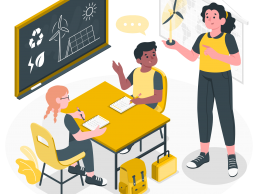
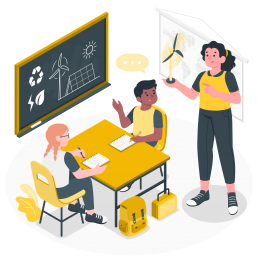
Take action! Not just planning, but also doing! How often do we as a society expect action and not just talk or planning? So how can people be motivated to act? How do you get people to take things into their own hands? By creating the conditions for it! This is exactly what is happening now with the climate agreement for Berlin schools. Climate protection and climate change are important everyday issues, especially for younger generations, as the many school strikes in recent years have shown. The idea behind the climate agreement is to give pupils a tool that they can use to take action for climate protection at their own school. The problem of climate change often seems overwhelming, structures seem too complicated to change and the effects of changing one’s own behavior on the problem seem far too small. The new climate agreement from the Senate Department for Education, Youth and Family enables pupils to make a binding agreement with their school to implement their own climate protection initiatives. Pupils therefore have the opportunity to launch their own climate protection initiatives at their school and implement them with the help of the school. The school, a seemingly bureaucratic system, becomes a partner of the pupils through the climate agreement. The climate agreement is also intended to strengthen pupils “ingenuity, solution-oriented thinking and willingness to take responsibility. As a member of the advisory board, UfU was involved in drawing up the climate agreement with the Senate Administration, representatives of the State Pupils” Committee, Fridays for Future Berlin and BUNDjugend. Florian Kliche, Managing Director of UfU: “We think it is important that pupils are given the opportunity to develop independent action in relation to climate protection. This is the first step towards bringing about change. The fact that the school is there to help them not only promotes initiative and a sense of responsibility, but also trust in our education system”. More information on the climate agreement can be found here: Climate Agreement (German only)
Prof. Dr. Thomas Schomerus for the Aarhus Committee
17. August 2021
Nomination of Prof. Dr. Thomas Schomerus to serve the Aarhus Committee of the United Nations by a strong alliance of European environmental NGOs
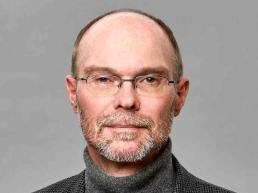
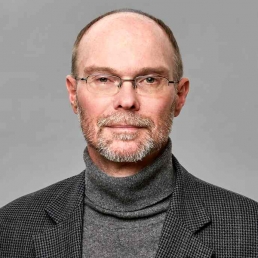
We congratulate a long-standing UfU partner and co-author to his nomination to the Aarhus Convention Compliance Committee (ACCC). On 22. July 2021 the Austrian OEKOBUERO – Alliance of the Environmental Movement, the German Independent Institute for Environmental Issues (UfU) e.V., the European Network Justice & Environment, the Ukrainian Resource and Analysis Center “Society and Environment” and the European Environmental Bureau, acting on the behalf of the European ECO Forum, have nominated Mr. Schomerus. The NGO candidate might be elected at the next Meeting of the of the Parties of the Aarhus Convention in October 2021.
Non-governmental organisations can – next to Parties and Signatories to the Aarhus Convention – nominate persons with recognised (legal) competence in Aarhus topics and of high moral character to serve the ACCC. For the first time since 2002 where the Compliance Committee was established, a German Committee member could be elected by its 47 Parties at the Seventh session of the Meeting of the Parties to the Aarhus Convention (MoP 7). The UfU would strongly welcome the first German ACCC membership by Mr. Thomas Schomerus due to his widely appreciated acknowledged legal competence in Aarhus topics and his high moral character.
Prof. Dr. Dr. h.c. (GTU Tiflis) Thomas Schomerus has been a civil servant (Regierungsrat, Oberregierungsrat) for eight years of the Free and Hanseatic City of Hamburg. He conducted permitting procedures, including public participation procedures with oral hearings. He has valuable practical experience in the application and enforcement of environmental law. During this time, he also represented the City of Hamburg in the Federal Council (Bundesrat). The German Bundesrat is a legislative body that represents the sixteen federated states (Bundesländer) of Germany. Through the Bundesrat, the Bundesländer participate in the legislation and administration of the Federal Republic and in matters of the European Union.
In addition, he has served as a much-respected administrative law judge at the Higher Administration Court (Oberverwaltungsgericht) of Lower Saxony in Lüneburg (7th Senate). In this role, he was entrusted with complex approval procedures and gained a broad overview of German and European jurisprudence in the infrastructure sector.
Moreover, Mr. Schomerus is an award-winning University Professor of Public Law, in particular Environmental and Energy Law, of the Leuphana University Lüneburg in northern Germany. He has not only published over 300 books, articles and commentaries (including on the Environmental Information Act) and worked on numerous research projects, the also shared his practical and scientific expertise at Task Force and Working Group meetings of the Parties to the Aarhus Convention.
Most recently, UfU had the honour to prepare a first comprehensive study together with Mr. Schomerus evaluating the Federal Environmental Information Act for the German Environment Agency (Umweltbundesamt, UBA). UfU is an independent and application-oriented research institute in eastern Germany with several Aarhus-related research projects. UfU highly appreciates Mr. Schomerus’ strong practical approach in applying environmental law. Mr. Schomerus is not only distinguished by his fruitful collaboration with the UfU, but also by his voluntary commitment to the German Society for Environmental Law (Gesellschaft für Umweltrecht, GfU) and Friends of the Earth Germany (Bund für Umwelt und Naturschutz Deutschland, BUND).
Mr. Schomerus’ work area is not limited to Germany. He has carried out numerous international projects in a wide range of countries within the UNECE region, inter alia Russia, the United Kingdom, United States of America, as well as European Union countries. He has received an honorary doctorate from the University of Tbilisi (Georgia). He is part of an international network with work activities in China, Japan, Mongolia, South Korea, and Taiwan.
To conclude, Mr. Schomerus is an outstanding legal expert highly respected by civil society actors, practitioners and governmental agencies of Germany and beyond. His work and contributions has been most appreciated by UfU, in his practical work for the City of Hamburg, the Higher Administration Court of Lower Saxony, the Federal Council (Bundesrat) as well his scholar work at international meetings to the Aarhus Convention and at the Leuphana University Lüneburg. Mr. Schomerus impresses greatly with his diligent work ethic and dedication. He comports himself with integrity at all times. Therefore, UfU is deeply convinced that Mr. Schomerus will contribute with his excellent legal, practical and scientific expertise to the invaluable work of the Compliance Committee.
The Aarhus Convention Compliance Committee (ACCC), which reviews the compliance with the Aarhus Convention by state parties, is in many cases the last chance of environmental associations and environmentally-concerned individuals to review compliance with environmental law beyond their national jurisdiction. They can turn to the ACCC with an individual communication, which can be seen as modelled by various individual human rights complaints.
The Aarhus Convention is a multilateral environmental agreement which promotes environmental democracy within the UNECE region. The Aarhus Convention grants the public and environmental NGOs rights regarding access to environmental information, public participation and access to justice, in governmental decision-making processes on environmental matters.
Register here if you want to join the digital Fifth Aarhus Workshop on Human Rights, European and National Climate Laws and the Importance of the Aarhus Convention on 7. September 2020 before the MoP 7.
To find out more about projects promoting environmental democracy by the Independent Institute for Environmental Issues click here.
Supporting small associations - with the Umwelt€uro

05. August 2021
Florian Kliche, Managing Director of UfU, is an honorary advisory board member of the Umwelt€uro. What he does there and what the Umwelt€uro is, he explains to us in a short interview.
UfU: Dear Florian, you have been a member of the Umwelt€uro project advisory board since 2019. What is the Umwelt€uro and how did it come about?
Florian Kliche: First of all, you have to know that there are simply an incredible number of non-profit organisations in Berlin that have good ideas and projects and are committed to this city. At the same time, the pavement is tough, especially for the small initiatives like neighbourhood gardens, non-profit workshops or educational initiatives. Many associations need regular donations and only survive through volunteers who support the associations in their free time. The Umwelt€uro is a campaign by the Berlin company GASAG, coordinated by Berlin 21 e.V., to support precisely these small initiatives and projects in Berlin.
UfU: How does the Umwelt€uro work?
Florian Kliche: As a non-profit organisation, I can apply to the Umwelt€uro with my initiative. For example, initiatives to protect city trees, to grow vegetables for children or to repair donated bicycles have already applied. The condition is that the project has an environmental connection as well as a relation to Berlin. We as the project advisory board look at the applications received and then include them in the campaign.
UfU: Once a project is included in the campaign, what happens next?
Florian Kliche: Now the collecting can begin. GASAG is providing 50,000 Euros for the campaign. Consumers decide which initiative gets how much money via the Umwelt€uro codes. These codes are available at various GASAG campaigns and also at the initiatives. This way, consumers can decide which initiative they want to support.
UfU: You are also the managing director of UfU. Why is the campaign close to your heart?
Florian Kliche: I am in a very good position. UfU now has almost 40 full-time employees working for us. This puts us in a position to participate in complicated tenders and to apply for large pots. However, one should not forget that there are many associations and initiatives that do not or not yet have this opportunity. That’s why I think it’s important to support this campaign.
UfU: Are there still free places for initiatives?
Florian Kliche: Yes, you can still apply. We are looking forward to more great projects and initiatives that want to take part in the campaign.
You can find the initiative here: https://unternehmen.gasag.de/nachhaltigkeit/umwelteuro